Key Takeaways
- ASTM C144 sand is usually the best paver joint sand in Jacksonville for durability and drainage.
- Polymeric sand can perform well, but it is more sensitive to installation moisture and curing conditions in Florida.
- Basic play sand is inexpensive up front but tends to fail quickly in wet, high-traffic environments.
- Compaction, proper joint fill depth, and sealing matter as much as the sand selection itself.
- Color matching (tan, beige, gray) affects final appearance and should be chosen intentionally.
If you are asking about the best sand for pavers in Jacksonville, the short answer is ASTM C144. It is dense enough to lock joints, coarse enough to drain, and predictable under Florida weather. For most residential paver systems, that balance is what creates long-term stability.
Where many projects fail is not just material choice, but process. Even the right sand underperforms if old joint material is left behind, if joints are underfilled, or if the surface is sealed before the sand has settled and compacted properly. If you are dealing with active loss now, this breakdown on why sand comes out of pavers explains the most common causes.
Why Jacksonville conditions make paver joint sand choice critical
Jacksonville and surrounding Northeast Florida markets are tough on paver joints for four reasons: heavy rain events, daily irrigation overspray, persistent humidity, and long heat cycles. Those conditions repeatedly wet and dry joint lines. Over time, weak or poorly graded material migrates, leaving voids where weeds, ants, and water intrusion start.
Heavy rain and irrigation pressure joints from above
Summer storms can dump water fast, and many homes run sprinkler systems that add daily moisture load. Joint sand that does not compact tightly gets displaced and thins out quickly.
Humidity slows drying and affects curing windows
In high humidity, joints stay damp longer after cleaning, rain, or morning dew. That can complicate products that need very specific dry conditions to set up correctly.
Heat amplifies movement and maintenance demands
High surface temperatures and UV exposure accelerate wear. Once joints weaken, movement starts at edges and transitions, then spreads across wider areas if not corrected.
ASTM C144 vs Polymeric vs Play Sand
When homeowners compare polymeric sand vs ASTM C144, the decision should be based on climate behavior, not marketing labels.
| Sand Type | Strengths | Common Florida Risks | Best Use Case |
|---|---|---|---|
| ASTM C144 | Reliable compaction, good drainage, stable in rain cycles | Requires correct install and sealing to hold long term | Most Jacksonville residential paver systems |
| Polymeric Sand | Can harden and reduce light erosion when conditions are ideal | Sensitive to moisture, haze risk, can fail if curing is disrupted | Controlled installations with strict moisture management |
| Basic Play Sand | Low cost, easy to find | Poor gradation, easy washout, weak lock-up in joints | Temporary patch only, not professional restoration |
ASTM C144 is typically the better paver joint sand Jacksonville homeowners can count on because it is consistent and less temperamental in wet subtropical environments. Polymeric products can work, but their success rate depends heavily on execution and weather timing.
Why HydroSeal uses ASTM C144 sand for most restorations
HydroSeal usually specifies ASTM C144 for Jacksonville paver sand replacement because it provides dependable joint performance across driveways, walkways, and patios. It compacts well, supports drainage, and pairs predictably with condition-based sealing.
That does not mean sand alone solves everything. Old failed sand must be removed first, joints must be filled to proper depth, and compaction has to be repeated to reduce future settlement. Then sealing helps stabilize the finished system so rain and rinsing do less damage over time.
If you want a deeper comparison on regional joint-fill choices, see what is the best sand for paver joints in Florida.
Color options: choosing a clean look without overthinking it
Most homeowners choose from tan, beige, or gray joint sand. The right option depends on whether you want joints to blend into the field or add light contrast for pattern definition. A warm tan often works well with earth-tone pavers; gray can sharpen cooler palettes; beige is a flexible middle ground.
Color is aesthetic, but it also affects perceived cleanliness. Very light sand can show staining sooner, while very dark sand can highlight dust. The best approach is sampling against dry and wet paver conditions before final selection.
Local example: Fleming Island driveway performance
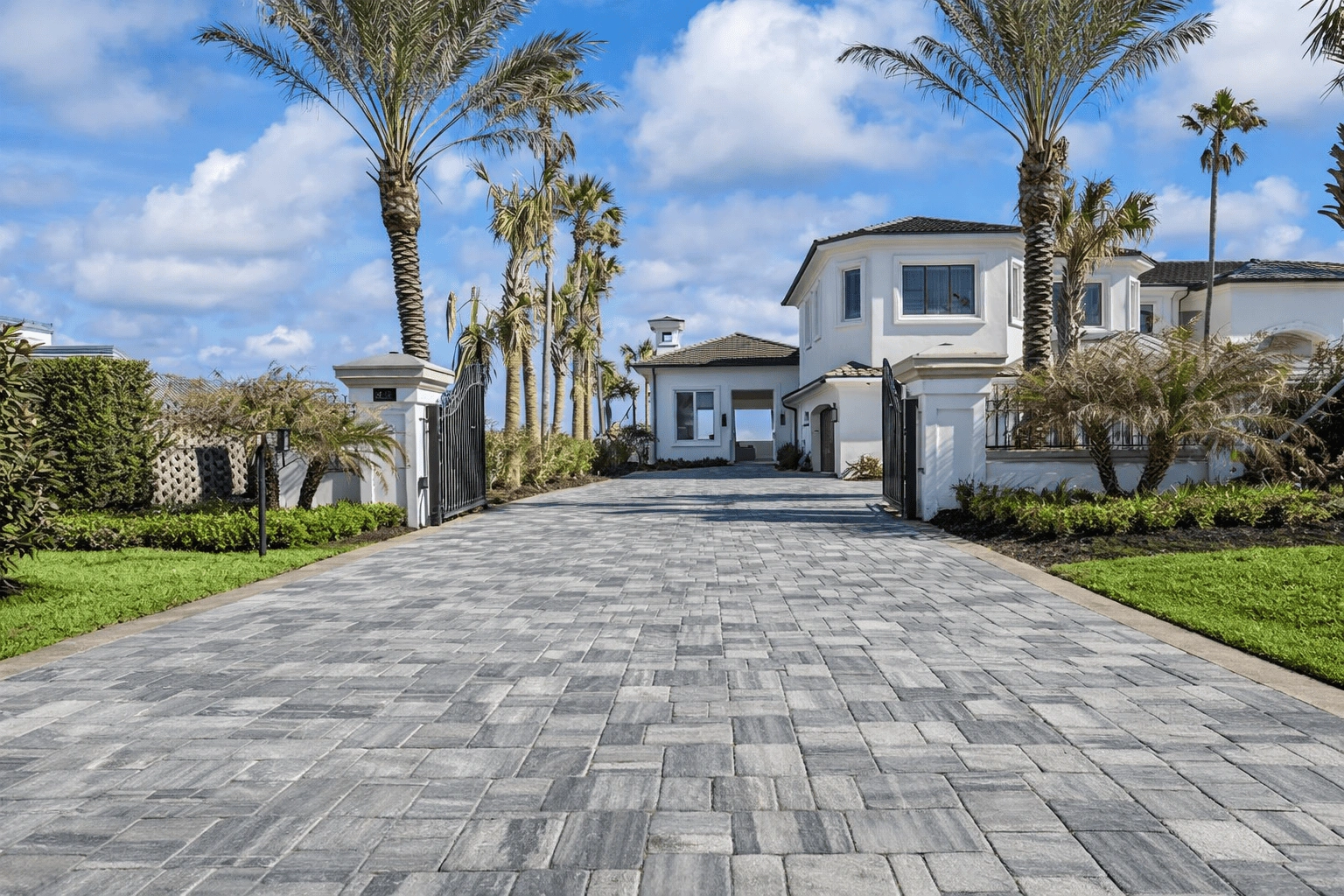
On a restored driveway in Fleming Island, the original joints had mixed filler and repeated washout near downspouts. After full joint cleanout, ASTM C144 refill, compaction passes, and sealing, the surface held noticeably better through summer rain cycles and routine irrigation. The change was not from one miracle product. It came from a complete sequence done in the right order.
The same logic applies to exposed walkways near the coast in Jacksonville Beach, where rain, salt air, and foot traffic can stress weak joints quickly.
Compaction and sealing: the steps that protect your sand investment
Compaction creates mechanical lock
Joint sand has to be worked into joints thoroughly, then compacted so particles interlock. Underfilled joints leave open channels for water and debris.
Sealing supports stability after installation
Sealing is not a substitute for correct filling, but it is a key protection layer. It helps resist erosion, slows biological growth, and supports cleaner maintenance cycles.
Condition-based timing matters in Florida
In humid conditions, rushing to seal can trap moisture and reduce results. Waiting for proper dryness protects both the joint system and the finish.
Frequently Asked Questions
For most Jacksonville paver installations, ASTM C144 concrete sand is the best overall choice because it compacts tightly, drains well in heavy rain cycles, and stays more stable under Florida irrigation and humidity when installed and sealed correctly.
In many Florida applications, yes. Polymeric sand can work in the right conditions, but ASTM C144 is often more forgiving in wet, humid climates and is less likely to fail from inconsistent moisture during curing.
Washout usually comes from a combination of intense rain, frequent irrigation, poor compaction, low-quality sand, and joints that were never properly stabilized after installation or restoration.
Choose a sand color that matches or lightly contrasts the paver field for a clean, consistent look. Common options are tan, beige, and gray, and the right choice depends on paver tone, joint width, and desired finish.
Yes. Proper sealing helps lock in joint stability, reduce erosion from rain and rinsing, and slow weed and algae pressure, but sealing only performs well when the joints are correctly filled and compacted first.