Google
★★★★★
5-STAR RATED TRAVERTINE RESTORATION.
Trusted for careful preparation and natural-stone protection across Northeast Florida.
Read customer reviews →
Natural-stone sealing in Northeast Florida
Also servicing Ponte Vedra Beach, Nocatee, and St. Johns County.
Trusted for careful preparation and natural-stone protection across Northeast Florida.
Read customer reviews →Careful preparation before sealing.
ASTM C144 kiln-dried sand.
Protection for porous natural stone.
Covered workmanship & adhesion.
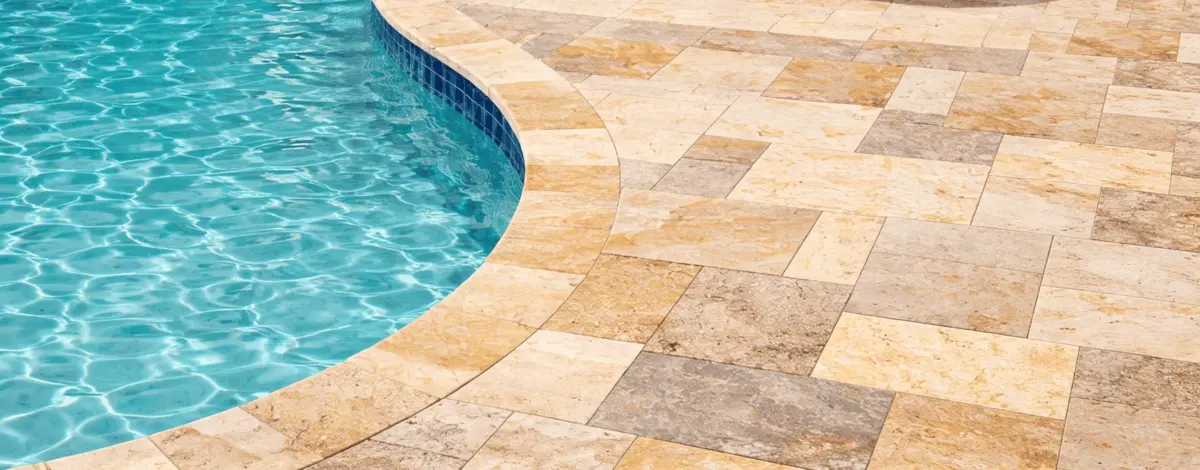
Travertine is porous natural stone, and the wrong cleaning or sealing process can leave behind etching, uneven color, or trapped moisture. We clean and seal travertine pool decks, patios, walkways, and other travertine surfaces throughout Jacksonville, Ponte Vedra, and nearby St. Johns County communities using a high quality, stone-safe process designed for protecting your travertine without taking away its natural beauty. For high-traffic entries, we also provide driveway sealing in Jacksonville. This is especially important on higher-end hardscapes in Ponte Vedra, Marsh Landing, and Queens Harbour.
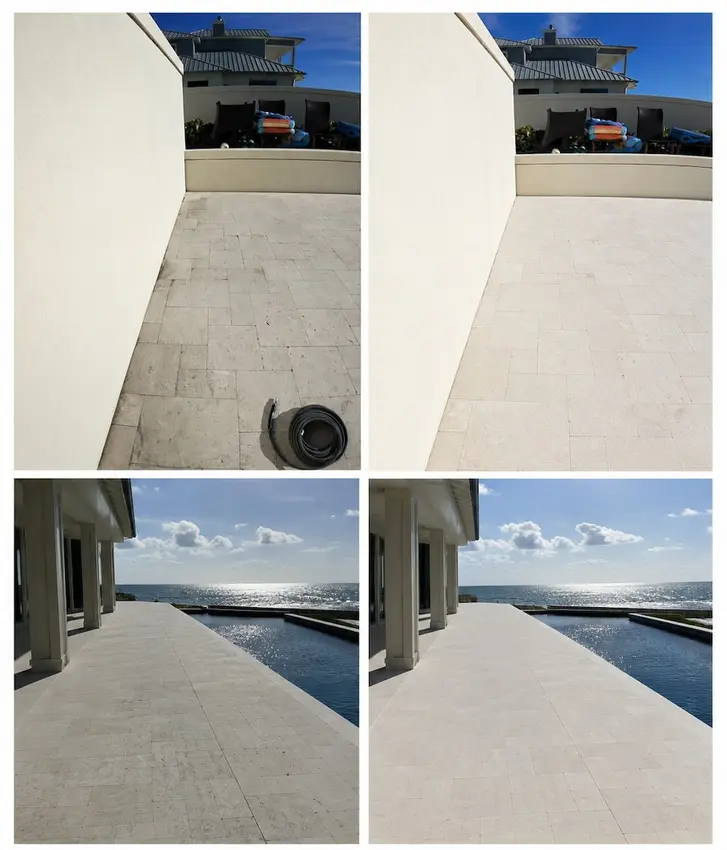
Yes. Travertine should be sealed because it is a porous natural stone that absorbs water, algae, chlorine, dirt, and oils. Sealing helps protect travertine surfaces from staining and moisture intrusion while preserving the natural beauty of the stone. In Jacksonville and Ponte Vedra, unsealed travertine around pools and patios can fade, darken unevenly, and become harder to maintain over time.
The best sealer for a travertine pool deck is usually a high quality penetrating sealer made for natural stone and wet environments. A quality sealer helps protect against staining, fading, algae, and moisture without leaving the surface overly slick or changing the appearance too much.
Travertine can etch if the wrong chemicals are used. We use a stone-appropriate process designed to clean without damaging the surface or creating uneven tone.
★★★★★“HydroSeal made our paver driveway look brand new. The color came back to life, the joints were properly sanded, and the finish was smooth and professional.”
Scott M. · Google
★★★★★“Outstanding results on our driveway, porch, and flower-bed pavers. Greg was professional, communicated clearly, and provided excellent customer service.”
Jane J. · Google
★★★★★“They took their time, paid attention to every detail, and were thorough from start to finish. Our pavers look brand new and exceeded expectations.”
Sophia K. · Google
Travertine is natural stone, so it needs a stone-safe cleaning and sealing process, not a “blast and coat” approach. Our goal is to clean and seal travertine evenly, protect it with a breathable sealer, and avoid the moisture and appearance problems caused by the wrong products.
We check porosity, existing sealers/coatings, traffic paths, splash-out/waterline zones, and low spots that hold water. We also identify hazing, dark patches, algae film, rust spots, and prior repairs so expectations are clear before work starts.
Travertine can etch if the wrong products are used. We pre-treat organics and grime with a stone-appropriate process designed to lift buildup without burning the surface or creating uneven tone — especially around coping and waterlines.
We clean to remove algae film, sunscreen oils, embedded dirt, and discoloration while protecting the stone’s texture. The goal is uniform results without etching, striping, or “hot spots” from over-pressure.
Pool decks often need targeted correction: rust treatment (furniture/fertilizer), dark organic spots, and damp zones. If an old coating is failing or patchy, we’ll explain whether a separate removal step is needed so you don’t lock in a bad look.
We do not seal wet stone. Before applying the sealer, we allow the travertine to fully dry so moisture is not trapped below the surface. We then apply a breathable, stone-safe penetrating sealer for even coverage — no streaks, no blotches, and no tacky areas. Using a quality sealer and the right drying time helps produce a more even, longer-lasting finish.
We review results and give clear return-to-use guidance. Most travertine pool decks need ~24 hours for foot traffic and 24–48 hours before normal pool use, depending on humidity, airflow, and shade/screened enclosures.
Yes. HydroSeal seals travertine pool decks in Jacksonville and helps homeowners choose the right finish and protection for the surface.
Yes. Travertine is a porous natural stone, and Florida pool decks are exposed to constant moisture, sunscreen oils, organic growth, and salt or chlorine splash-out. Sealing helps reduce absorption so stains are less likely and routine cleaning is easier.
The key is using a breathable, stone-safe sealer. Sealing too soon or with the wrong product can trap moisture and cause darkening or blotchy areas — which is why prep and timing matter.
Most travertine pool decks perform best with a high quality penetrating sealer, sometimes called an impregnating sealer. These sealers soak into the stone instead of forming a surface film, helping resist staining while keeping the natural beauty of the travertine.
We choose the right travertine pool deck sealer based on the stone’s condition, porosity, prior treatments, and how the area is used.
It can — if the wrong product is used or it’s over-applied. Slippery pool decks almost always come from sealers that leave too much material on the surface.
For pool areas, we prioritize low-sheen, controlled finishes. If extra traction is desired, we can add a professional anti-slip additive to improve grip without making the surface feel rough.
Travertine can be etched or damaged by harsh chemicals and aggressive pressure. Proper cleaning uses stone-appropriate chemistry, controlled dwell time, and thorough rinsing — not high pressure or acidic shortcuts.
We focus on removing algae, organic staining, sunscreen oils, rust spots, and waterline splash-out while preserving the stone’s natural texture and color.
Longevity depends on sun exposure, how often the deck stays wet, pool usage, and maintenance. Pool decks typically wear faster than patios due to constant moisture and foot traffic.
The best approach is maintenance cleaning and timely resealing before total wear-through. This keeps color consistent and avoids the need for heavy restoration later.
Cure time depends on humidity, airflow, shade, and whether the pool area is screened. Screened enclosures often slow drying because moisture lingers longer.
Most jobs require about 24 hours before foot traffic and 24–48 hours before normal pool use. We’ll give you clear, site-specific guidance on service day so you don’t risk the finish.
If you are searching for travertine sealing near me, HydroSeal provides material-specific cleaning and sealing for travertine pool decks, patios, and outdoor living areas across Jacksonville, St. Johns County, Ponte Vedra, Nocatee, and nearby Northeast Florida communities. We evaluate porosity, moisture, fill condition, staining, previous treatments, and the desired finish before recommending the sealing process.

Trusted by Northeast Florida Homeowners