Google
★★★★★
5-STAR RATED PAVER RESTORATION.
HydroSeal approaches paver pressure washing as controlled surface preparation, not a race to use the highest pressure.
Read customer reviews →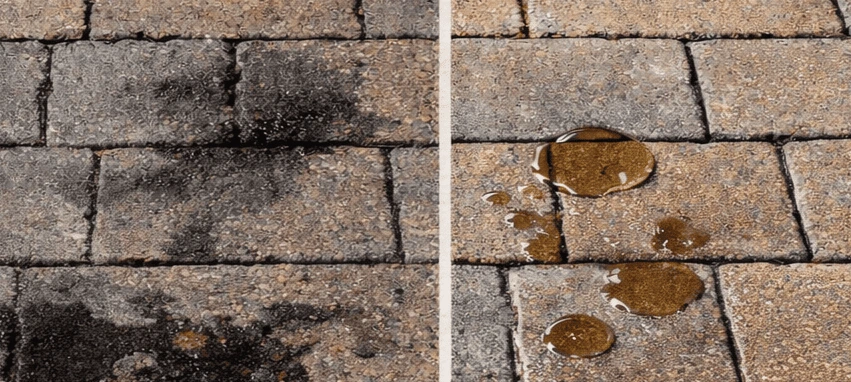
Professional paver cleaning in Northeast Florida
Surface-safe pressure washing. Targeted treatment. Cleaner pavers without careless blasting.
HydroSeal approaches paver pressure washing as controlled surface preparation, not a race to use the highest pressure.
Read customer reviews →Material, coating, joints, drainage, and contamination are checked first.
Enough force to clean without treating maximum PSI as the goal.
Organic buildup, rust, oil, and mineral issues are evaluated separately.
Thorough rinsing and preparation when cleaning is part of a sealing project.
A dirty paver driveway can contain algae, mildew, traffic film, tire residue, irrigation minerals, rust, oil, leaf tannins, loose joint material, and remnants of old sealer at the same time. Those are different problems. A professional paver cleaning company should not treat every stain as if more pressure is the answer.
Pressure washing is one of the tools used to clean concrete and brick pavers, but the cleaning result comes from the full process: identifying the surface, selecting appropriate chemistry when needed, allowing enough dwell time, using controlled mechanical cleaning, and rinsing thoroughly.
On porous pavers, an overly tight nozzle pattern or excessive pressure can expose aggregate, leave wand marks, disturb stable coatings, or blow joint sand out faster than necessary. On previously sealed pavers, aggressive cleaning can also create patchy coating damage that looks worse once the surface dries.
For homeowners comparing pressure washing in Jacksonville, FL, the important question is not simply how much PSI a machine produces. It is whether the contractor understands pavers as a system of surface, joints, existing sealer, drainage, and surrounding materials.
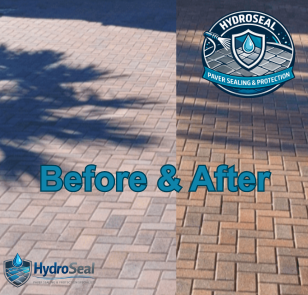
Cleaning results vary with the paver material, stain type, porosity, existing sealer, age, and previous maintenance. These comparison sliders show the kind of visible improvement proper preparation can create before the next restoration step.
Florida humidity, shade, irrigation, and slow-drying areas can support green or dark organic buildup. Appropriate cleaning chemistry and dwell time can reduce the need for unnecessarily aggressive pressure.
Fresh surface contamination may respond to specialty degreasing. Older oil can migrate into porous concrete pavers and leave a residual shadow even after professional treatment.
Orange irrigation or metal staining usually calls for dedicated chemistry rather than stronger pressure. Stain age and the surface material affect how much improvement is possible.
Organic staining from leaves, landscaping, and standing debris can bond differently than ordinary dirt. Treatment is selected after the surface and stain are evaluated.
White mineral haze is not the same as mildew or soil. Efflorescence and mineral deposits may need specialty restoration chemistry and should not be attacked by simply increasing pressure.
Whitening, peeling, trapped moisture, or heavy film buildup can be a coating problem rather than a cleaning problem. Those surfaces may need resealing preparation or stripping instead of ordinary power washing.
Pavers and natural stone are porous. Professional cleaning can dramatically improve many stains, but complete removal cannot be promised when oil, rust, minerals, tannins, or previous coatings have penetrated deeply or chemically changed the surface.
Organic growth often responds better when the correct cleaner is applied and given time to work. This can reduce the amount of mechanical force needed. That is the principle behind soft-wash cleaning: use chemistry and controlled application instead of relying only on pressure.
But paver cleaning can still require mechanical cleaning and careful rinsing, especially on driveways with traffic film or surfaces being prepared for sealing. Calling every project a “soft wash” can be just as misleading as assuming every project should be blasted at full pressure.
Joint sand is part of the paver system. If joints are already low, loose, or eroded, high-pressure cleaning can accelerate sand loss. The condition of the joints should be recognized before cleaning starts.
If a cleaning-only project reveals low joints, that does not automatically mean every surface must be resanded. If cleaning is part of a full sealing project, however, joint restoration may become part of the preparation scope before sealer is applied.
Driveways commonly carry tire marks, traffic film, oil residue, irrigation staining, sun exposure, and heavier joint wear. Driveway pressure washing should clean the surface without needlessly scarring pavers or excavating the joints.
Pool decks add screened enclosures, coping, drains, splash zones, wet walking areas, and pool-water concerns. Overspray and runoff control matter as much as cleaning strength.
Shaded patios and side walkways often hold organic growth longer than open driveways. Chemistry, drainage, landscaping, and adjacent walls or doors all affect the cleaning setup.
Natural stone is not treated like ordinary concrete pavers. Stone-safe chemistry and lower-impact technique are selected around porosity, fill, surface finish, and existing protection.
When paver cleaning is the first stage of a sealing project, the goal is not simply to make the pavers look cleaner while they are wet. Dirt, active organic growth, cleaner residue, loose material, and incompatible coating problems need to be addressed before a new sealer system is considered.
After cleaning, the surface needs adequate rinsing and drying. Existing coating compatibility, moisture, joint condition, weather, and the desired finish are then evaluated separately. Cleaning and sealing are connected steps, but they are not the same step.
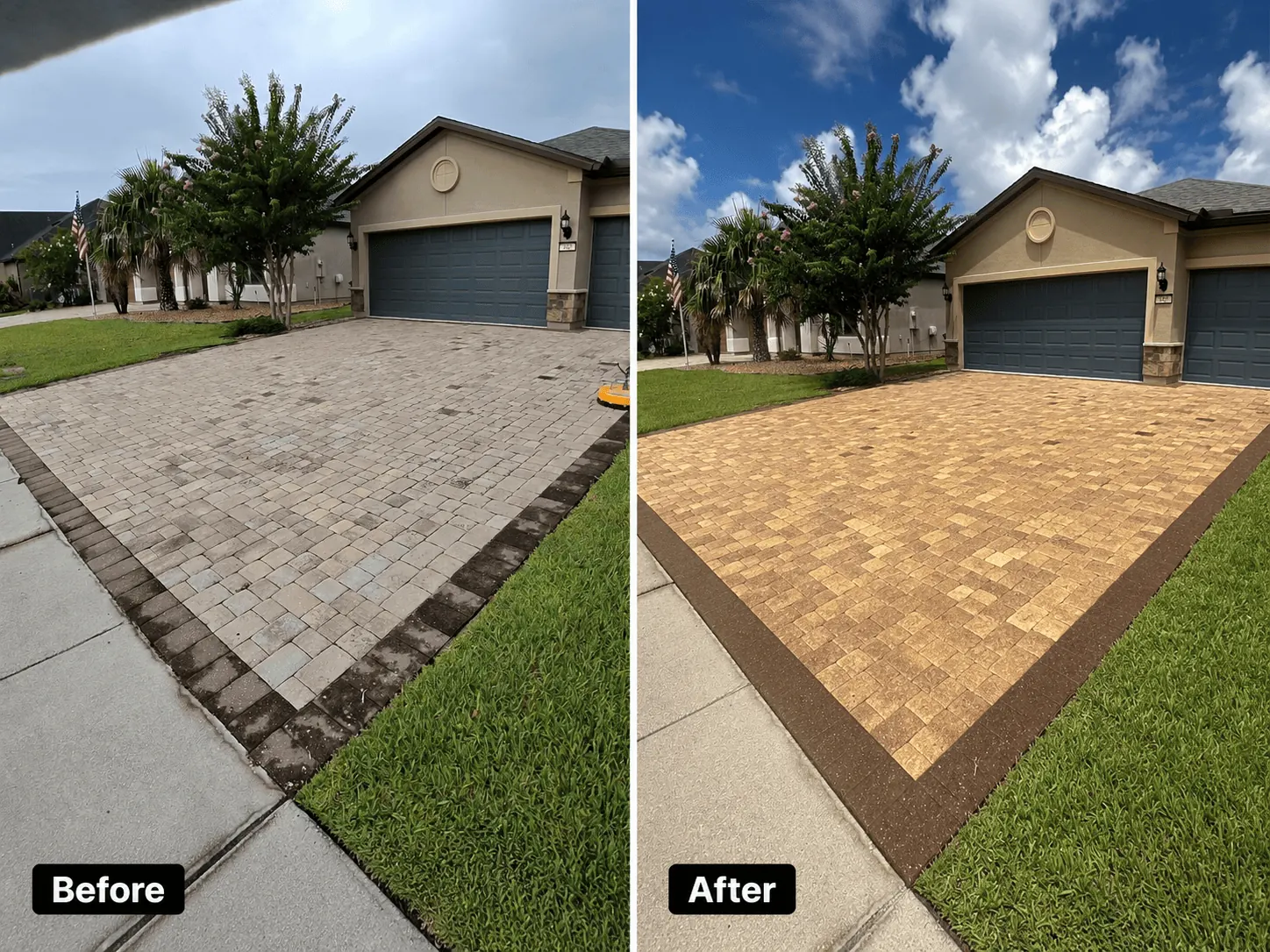
A reputable pressure washing company should know when to stop washing and explain the underlying condition. More pressure cannot correct every surface defect.
If the coating is failing, patchy, cloudy, or moisture-damaged, the project may need resealing preparation or stripping rather than another cleaning pass.
Cleaning does not rebuild a failed base or level pavers. Selected small reset and re-level work should be addressed separately before the finished restoration.
Efflorescence, irrigation minerals, rust, and deeply absorbed oil may need specialty treatment and realistic expectations about residual discoloration.
HydroSeal cleans paver driveways, pool decks, patios, and walkways throughout the Jacksonville area and selected communities in St. Johns and Clay counties. If you are comparing a local pressure washing company or searching for pressure washing near you, send photos of the paver surface—not just the square footage. Surface type, staining, joints, access, and existing sealer all affect the right cleaning plan.
Yes. Excessive pressure, cleaning too close to the surface, or poor technique can etch softer pavers, expose aggregate, disturb coatings, and remove joint sand. The goal is controlled cleaning, not maximum pressure.
It depends on the material and contamination. Organic buildup can often be loosened with appropriate chemistry and dwell time, reducing the amount of mechanical force required. Driveways and other paver surfaces may still need controlled mechanical cleaning and rinsing.
Most organic buildup can be substantially improved when the right chemistry, dwell time, cleaning technique, and rinsing are used. Shade, drainage, porosity, and how long the growth has been present affect the final result.
Aggressive washing can. We inspect the joints first and use controlled technique to reduce unnecessary sand loss. If joints are already low or unstable, we explain that before cleaning.
No. Cleaning can be a standalone service. If sealing is planned, the cleaning stage becomes preparation for the coating and is followed by drying, joint evaluation, and sealer-compatibility checks.
Not always. White mineral deposits, efflorescence, trapped moisture, or failed sealer are different conditions. They may require specialty chemistry, resealing preparation, or stripping rather than ordinary cleaning.
If you are searching for paver cleaning and sealing near me or paver restoration near me, HydroSeal serves Jacksonville, St. Johns County, Ponte Vedra, Nocatee, Orange Park, Fleming Island, and nearby Northeast Florida communities. We evaluate the paver surface, stains, joint sand, previous sealer, drainage, and overall condition before recommending cleaning only, cleaning and sealing, resealing, or a more involved restoration process.
Send photos of the driveway, pool deck, patio, or walkway. We will review the surface, staining, joints, and existing sealer and recommend the correct next step.