
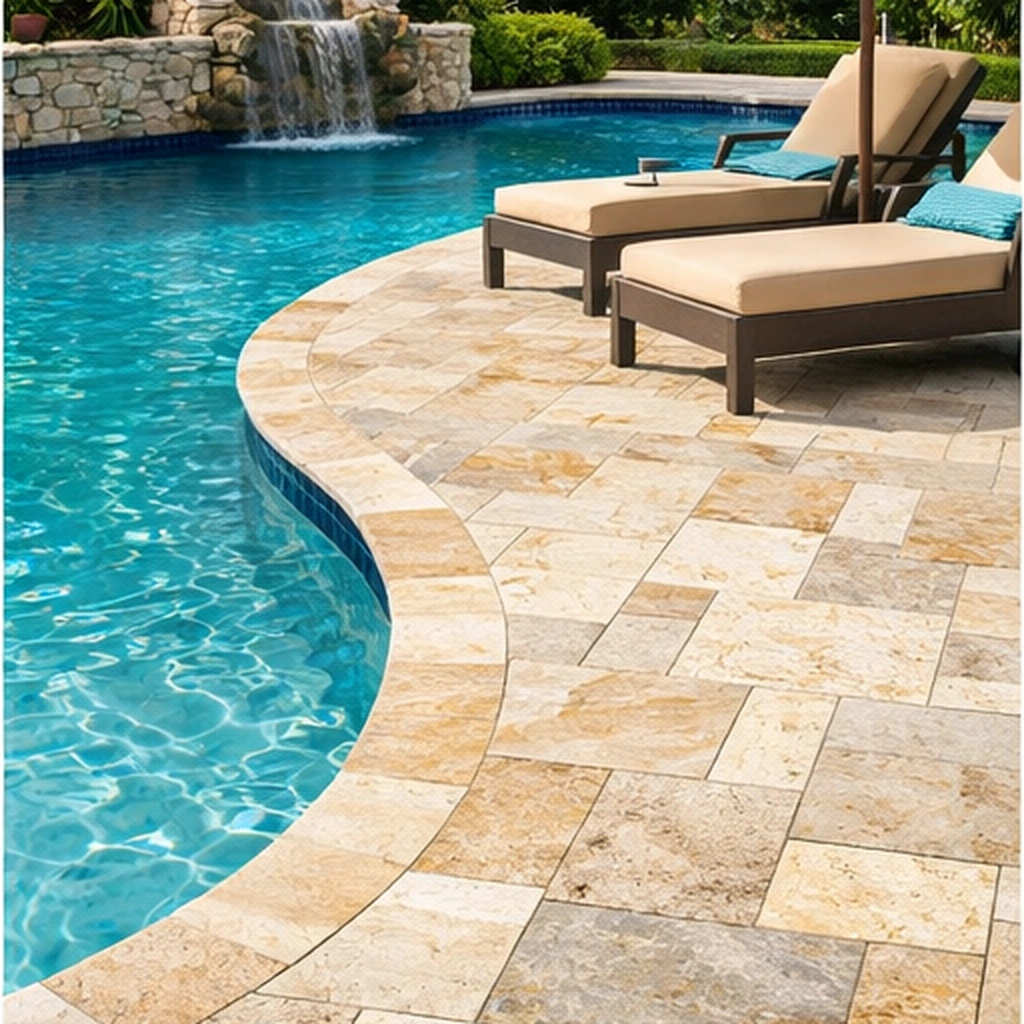
Texture matters more than the sales pitch
Not all travertine surfaces feel the same underfoot. The cut, finish, and condition of the stone affect traction. A deck with healthy texture and good maintenance will usually feel different from one with organic film, residue, or an overly slick finish applied on top.
Organic film is often the real culprit
Many slip complaints are not caused by the travertine itself. They come from algae, mildew, sunscreen buildup, or a dirt film that develops in damp areas. In Florida, those conditions can build up fast if the deck is not cleaned routinely. That is why cleaning is part of slip safety, not just appearance.
Sealer choice can help or hurt
The wrong finish on a wet-use surface can make homeowners less comfortable with the deck, even if it looks beautiful at first. Pool areas need a sealer approach that prioritizes safe wet performance and durability over high shine. For a broader view, read best sealer for pool decks.
Daily use changes how safe the deck feels
A travertine deck right next to the pool steps, spa spillway, or outdoor shower will always have different moisture conditions than a dry lounge section. That means some zones need more cleaning and closer attention. Homeowners should evaluate the entire deck, not just the best-looking section.
The safest travertine deck is one with the right process behind it
Proper cleaning, correct finish selection, and ongoing maintenance matter more than one headline answer. If your deck feels slick, the issue may be removable buildup, moisture retention, or a finish mismatch rather than the stone itself. Our travertine cleaning guide can help you sort out the next step.
Frequently Asked Questions
Many homeowners find textured travertine more comfortable, but actual slip resistance still depends on the finish and upkeep.
The wrong sealer or sheen choice can affect how the deck feels when wet.
It is often related to shade, algae growth, water exposure, or residue buildup in specific zones.
Not necessarily. The better solution is using the right system for a wet-use surface.