Natural-Stone Cleaning Guide
How to Clean Travertine Without Damage in Florida
Travertine is calcium-based natural stone. Safe cleaning depends on stone-appropriate chemistry, controlled pressure, stain diagnosis, complete rinsing, and avoiding aggressive acids.
Quick answer
Clean travertine with the mildest effective stone-safe cleaner, soft agitation, controlled pressure, and thorough rinsing. Avoid vinegar, muriatic acid, and one-size-fits-all concrete cleaners because acids can etch the stone rather than clean it.
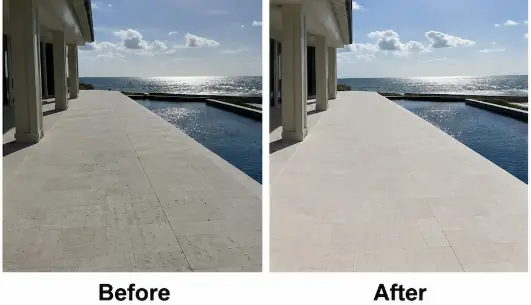
7-step travertine cleaning process
- Identify filled or unfilled travertine, old sealer, cracks, stains, and loose filler.
- Remove leaves, soil, and loose debris.
- Protect plants, metals, glass, pool equipment, and adjacent finishes.
- Test a stone-safe cleaner in an inconspicuous area.
- Apply evenly and prevent the chemistry from drying.
- Agitate gently and rinse with controlled pressure.
- Allow complete drying before evaluating stains, repairs, or sealing.
Travertine stain comparison
| Condition | Likely source | Treatment direction |
|---|---|---|
| Green or black growth | Algae, mildew, organic buildup | Stone-safe organic treatment and controlled rinsing |
| Brown leaf marks | Tannins | Targeted stone-compatible treatment; multiple passes may be needed |
| Orange or metallic marks | Rust, irrigation, furniture, fertilizer | Stone-specific rust treatment and test area |
| White crust or haze | Minerals, hard water, efflorescence, old coating | Diagnose before treatment; do not assume acid is safe |
| Dull or chalky patch | Etching, weathering, residue, coating failure | Determine whether the stone itself has changed |
Pressure-washing precautions
- Use a wide fan and greater distance than on durable concrete.
- Do not aim directly into holes, cracks, grout, coping joints, or soft filler.
- Keep equipment moving to avoid stripes and etched paths.
- Use a surface cleaner only with suitable nozzles, flow, pace, and testing.
- Do not rely on pressure alone for stains that require chemistry.
What permanently damages travertine
Acid etching, aggressive pressure, enlarged pores, lost filler, scratches, and some deep stains are changes to the stone—not dirt sitting on top. Cleaning may improve appearance, but complete restoration cannot be promised before inspection.
Northeast Florida conditions
Travertine pool decks in Nocatee, Ponte Vedra Beach, Ponte Vedra, and Jacksonville-area communities often collect algae, sunscreen, leaf tannins, irrigation minerals, and coastal residue. Shade and humidity increase dwell time for organic growth. For professional cleaning, sealing, and natural-stone protection options, see our Travertine Sealing service.
Common questions
Can vinegar be used to clean travertine?
No. Vinegar is acidic and can etch calcium-based travertine, dull the finish, damage filler, and permanently change the stone.
Can travertine be pressure washed?
Yes, with controlled pressure, a wide spray pattern, proper distance, and care around holes, filler, grout, coping edges, and existing sealer. Aggressive close-range pressure can damage the stone.
Why does travertine look chalky after cleaning?
Possible causes include acid etching, mineral residue, weathering, old coating, cleaner residue, or moisture. Diagnosis is needed before more chemistry or sealer is applied.
Need help cleaning or restoring travertine?
Send HydroSeal photos of the condition and any known chemical or coating history. Treatment and restoration feasibility require inspection.