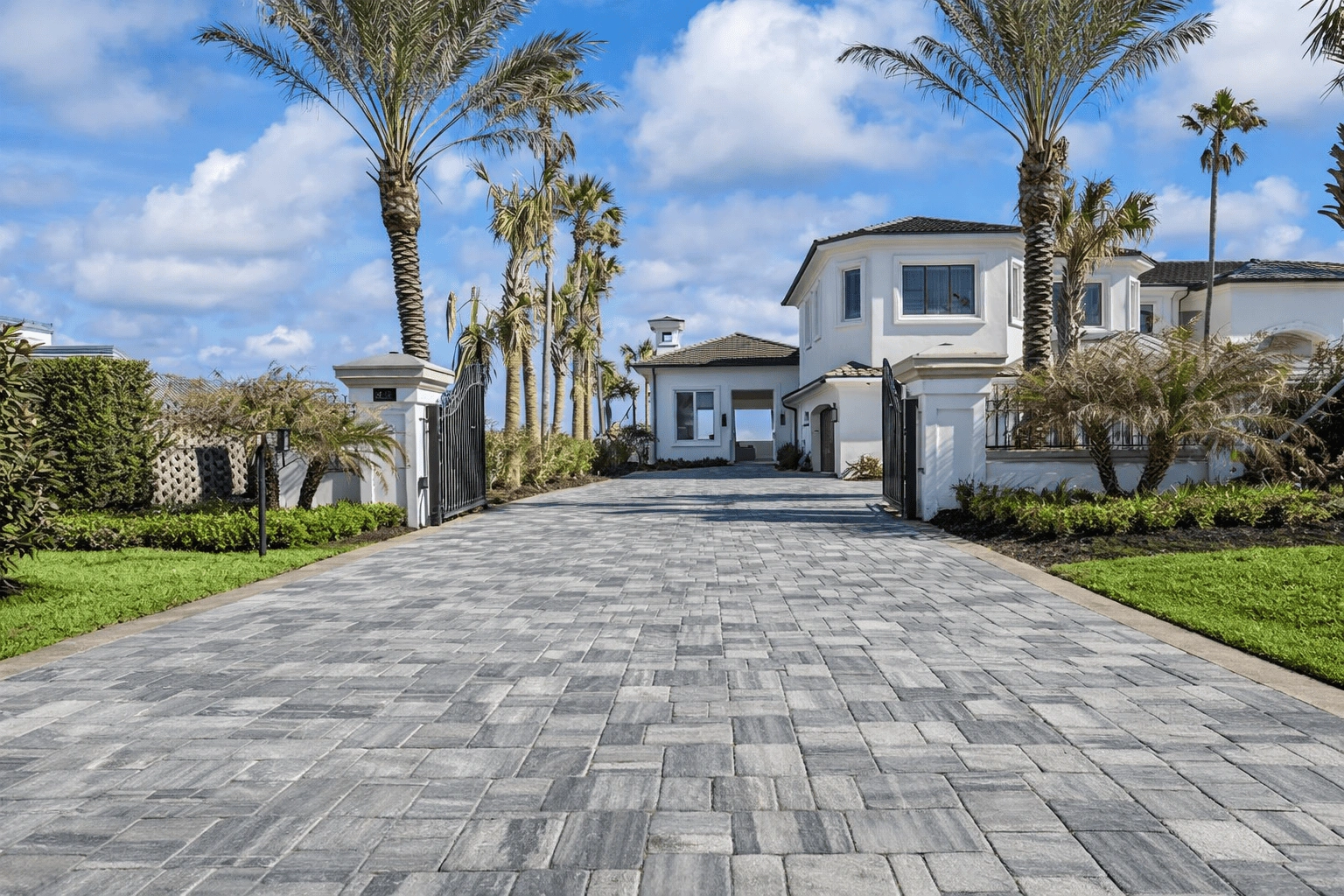
Key Takeaways
- Unsealed Jacksonville pavers typically fade, lose joint sand, and accumulate weeds/biological growth faster than in drier climates.
- Professional sealing protects color, supports joint stability, reduces biological buildup, and extends service life.
- Typical maintenance math is about $1.50/sq ft every 2–3 years versus replacement at roughly $15–$25/sq ft.
- Joint sand loss is a major turning point. Once joints deplete, weed growth, ants, and paver movement often follow.
- In many HOA communities, appearance maintenance is also a compliance issue.
What Happens to Unsealed Pavers in Florida
In Northeast Florida, repeated UV exposure, rain, humidity, and irrigation create a predictable wear pattern. Year one may show only minor changes, but by years two and three many driveways show visible fading, declining joint sand, weed pressure, ant activity, and more algae/mildew in shaded areas. By years four and five, porosity and staining risk increase, and neglected surfaces can require expensive restoration instead of routine upkeep.
Sealed vs. Unsealed at Year Four
Maintained, sealed surfaces generally keep color better, hold joints longer, and stay easier to clean. Unsealed surfaces typically show uneven fade, depleted joints, more invasive growth, and higher correction costs. Over a four-year window, two maintenance cycles often cost less than deferred remediation on a neglected surface.
The Cost Comparison Homeowners Actually Face
- Routine sealing (example 600 sq ft driveway): about $900–$1,200 every 2–3 years.
- Major remediation: commonly about $1,800–$2,800+ when correction is delayed.
- Replacement: often around $9,000–$15,000 depending on scope and site conditions.
For most homeowners, predictable maintenance is the more financially stable path.
Where Sealing Is Most Worth It in Northeast Florida
- HOA neighborhoods where appearance standards are actively enforced.
- Coastal properties with salt air and elevated humidity.
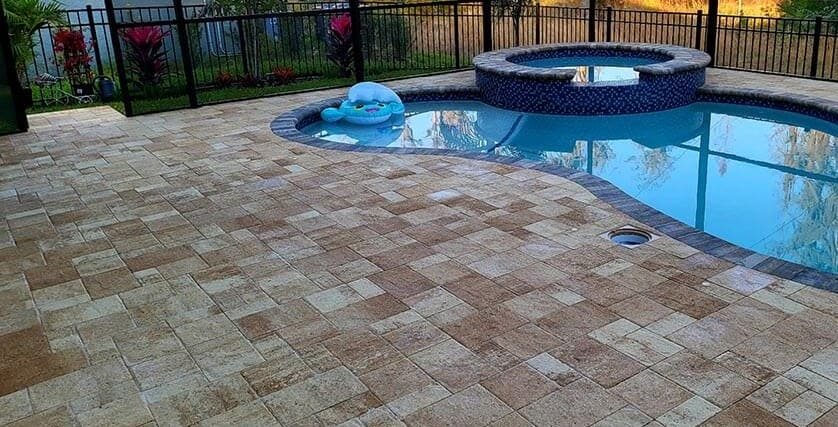
- Pool decks where algae management and slip safety matter.
- Pre-sale prep when curb appeal is a pricing and perception factor.
- Irrigation-exposed driveways that cycle moisture constantly.
When Sealing Is Less Worth It
- Surfaces with structural failure (repair base/structure first).
- Very low-visibility, low-traffic areas without HOA pressure.
- Low-grade DIY applications likely to fail quickly and require remediation.
Frequently Asked Questions
Usually no, but prep and remediation needs are typically larger than a normal maintenance service.
Cleaning improves appearance temporarily but does not add UV/joint protection or slow sand loss the way sealing can.
Not always. Failed low-cost applications can increase total cost once stripping and redo work are required.
In Florida, factory finishes are usually temporary and do not replace ongoing maintenance sealing.
The Short Answer
For most Jacksonville-area homeowners, sealing is worth it when evaluated over a two-to-three-year cycle and compared against the cost of deferred correction.