
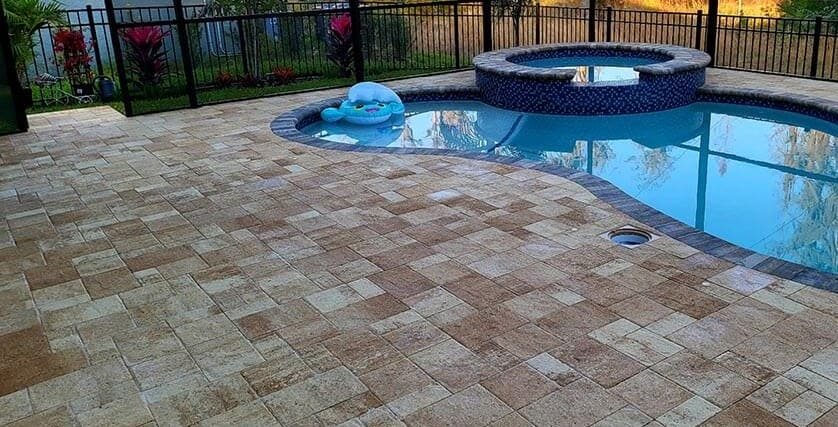
Color looks flat or patchy again
Freshly sealed pavers usually have a richer, more even appearance. When that finish wears down, the surface can start looking dry, chalky, or uneven, especially in areas that get hard afternoon sun. In Northeast Florida, UV exposure is a major factor. Driveways and south-facing patios often fade first because the sealer film takes the daily sun load before the pavers do.
Water no longer beads on the surface
One of the clearest homeowner-friendly tests is to watch what happens after a quick rinse or a summer rain. If water immediately soaks in instead of sitting on the surface briefly, the protective layer is likely wearing thin. That does not automatically mean the pavers are in bad shape, but it does mean they are more exposed to oil drips, organic staining, and moisture cycling.
Joint sand is loosening after storms or cleaning
Sealer helps stabilize joint sand, but once the system ages, the sand can start migrating again. Homeowners often notice thin joints, small channels near edges, or extra sand collecting after a pressure wash or downpour. That matters because joints do more than fill gaps. They help lock the surface together, reduce movement, and make it harder for weeds to take hold.
Stains are setting faster than they used to
When a sealed surface is still performing well, most routine spills stay closer to the top and clean up more easily. Once the protection fades, leaf tannins, grill grease, rust, and planters can leave marks faster. Pool decks and shaded patios are especially vulnerable because moisture lingers longer and organic debris can sit in place between cleanings.
Don’t wait until the surface looks fully worn out
A lot of homeowners wait for dramatic failure, but the better time to reseal is usually when protection is clearly declining and the surface is still in otherwise good condition. That approach allows for lighter prep, more predictable results, and less risk of long-term staining. If your pavers also need cleaning first, compare the maintenance timing in our resealing schedule guide and the finish choices in our matte vs. glossy sealer article.
Frequently Asked Questions
If the surface still beads water evenly after cleaning, the sealer may still be working. If it looks dull and also absorbs water quickly, protection is usually fading.
Usually yes for appearance consistency, but drive lanes, sunny sections, and heavily used paths often wear faster and show the earliest signs.
Usually no. The surface and joints need enough dry time first, especially during humid Florida weather.
Fading is a strong clue, but the best decision comes from looking at color, water absorption, joint condition, and stain resistance together.