Key Takeaways
- HydroSeal often completes paver sealing in one day during spring and summer when conditions support it.
- Two-day scheduling is used when humidity, retained moisture, shade, or rain risk make same-day sealing unsafe.
- Surface type matters: shaded drives, travertine pool decks, and heavily sanded joints often need extra dry time.
- Process quality depends on old sand removal, ASTM C144 refill, and Trident-only products applied at the right time.
- The correct timeline is condition-based, not an arbitrary promise.
If you are comparing one-day vs two-day paver sealing in Florida, the right answer is: both are normal. A one day paver sealing schedule is common when weather and surface conditions cooperate. A two day paver sealing schedule is the safer choice when they do not.
HydroSeal frequently completes projects in one day during spring and summer, especially on warm, sun-exposed concrete pavers. But the process may extend to day two when moisture levels, humidity, rain probability, or material condition require it. This is not overcomplication. It is how you prevent avoidable failure.
What actually controls the paver sealing timeline in Florida
Moisture inside pavers and joints
After cleaning, pavers may look dry on top while still holding moisture below the surface. Sealing too early can trap that moisture and reduce adhesion or appearance quality.
Humidity and overnight dew cycles
Florida humidity slows evaporation. Even when daytime heat is strong, high overnight humidity can keep joints damp into the next morning, especially in shaded zones.
Rain windows and storm volatility
Passing showers can force schedule adjustments. If rain hits during key curing windows, performance issues become more likely.
Surface temperature and sun exposure
Very hot surfaces can accelerate flash-off, while cooler shaded surfaces dry slowly. Both extremes require careful timing so the sealer levels and cures correctly.
This broader Jacksonville heat, rain, and humidity guide explains the same logic at a category level, and this article focuses specifically on Florida field conditions.
One-Day Job vs Two-Day Job
| Scenario | Often One Day | Often Two Days |
|---|---|---|
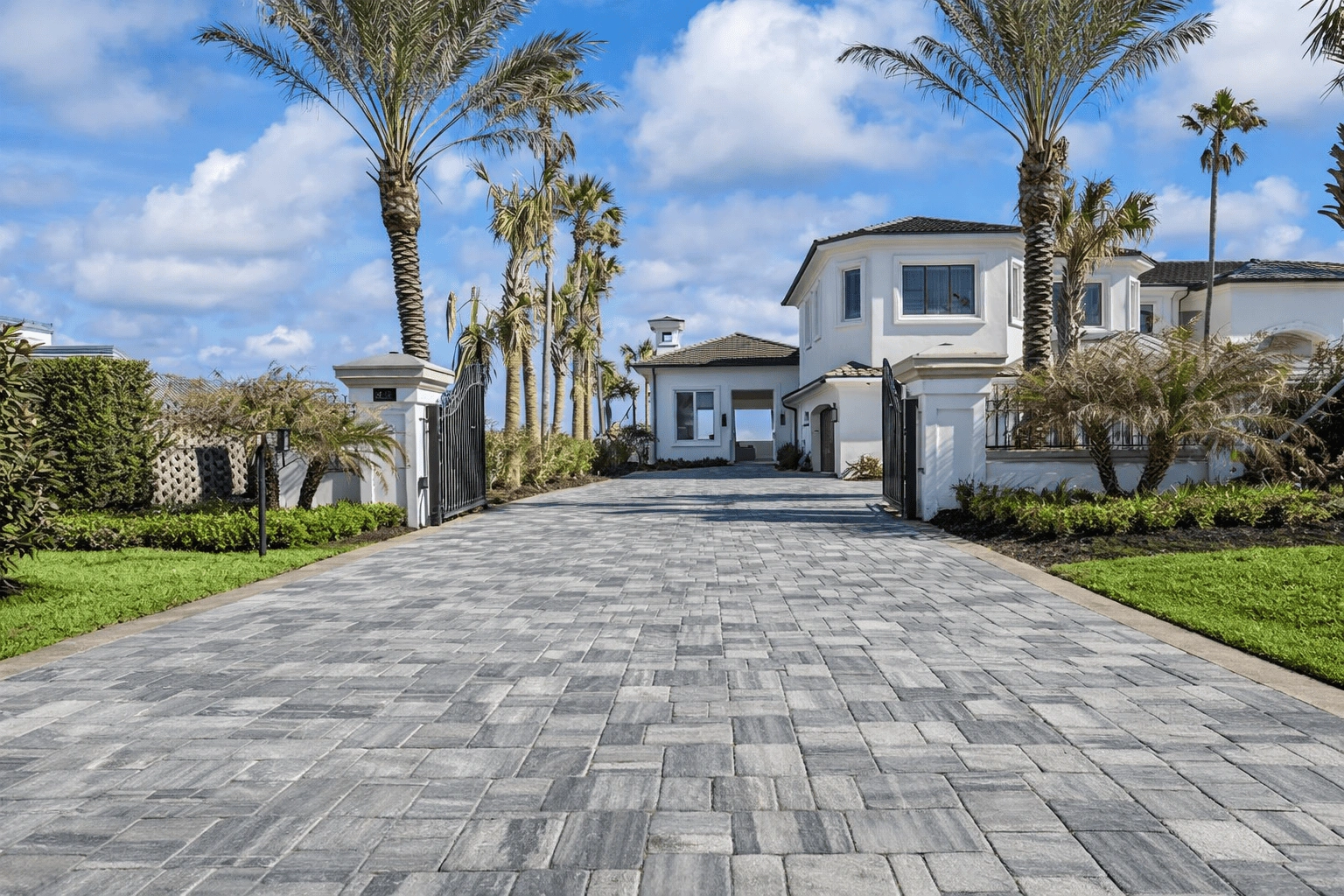
| Hot sunny driveway | Yes, when drying conditions are stable and rain risk is low | Possible if overnight moisture or storm risk interrupts cure window |
| Shaded driveway | Sometimes, but less predictable | Common due to slower drying and lingering damp joints |
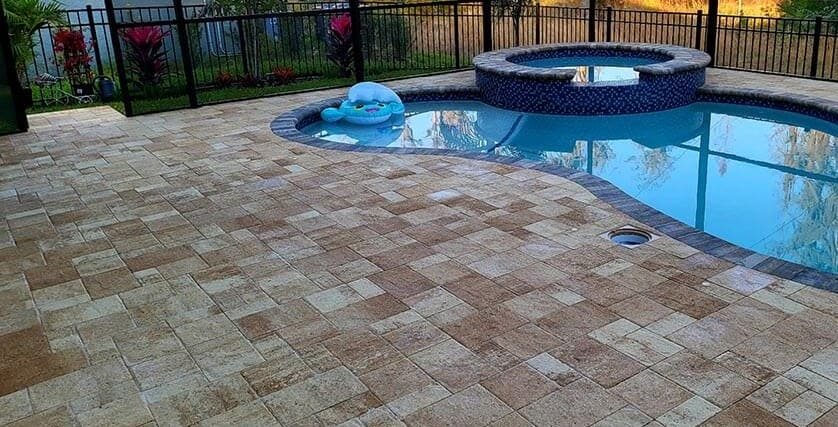
| Travertine pool deck | Occasionally, in ideal conditions | Frequent, because travertine and pool zones need tighter moisture control |
| Heavily sanded surface | Only if joints settle quickly and surface dries uniformly | Often needed to allow joint stabilization before sealing |
How HydroSeal approaches timeline decisions
The paver sealing process Florida homeowners get from HydroSeal is condition-based from start to finish:
1) Old sand removal and prep
Failed or contaminated joint material is removed so the new system is built on stable joints, not on debris.
2) ASTM C144 sand refill and compaction
Fresh ASTM C144 is installed and compacted to proper depth for joint lock and drainage performance.
3) Trident-only sealer system
HydroSeal applies Trident-only products matched to the surface type and use case, including pool-deck and travertine needs.
4) Timing based on real conditions
Instead of forcing a fixed promise, sealing windows are chosen by moisture, weather, and surface readiness. That protects outcome consistency.
If you are planning around seasonality, this local guide on the best time of year to seal pavers in Florida helps with scheduling expectations.
Local examples: why one property finishes in a day and another does not
Mandarin driveway: often a one-day candidate
A sun-exposed driveway in Mandarin with moderate joint loss and strong daytime heat may clean, dry, sand, and seal in one day when rain risk is low.
Nocatee driveway: depends on shade and irrigation pattern
In Nocatee, newer communities often have active irrigation and mixed shade from landscaping. These variables can push a project to two days if joints remain damp after prep.
Ponte Vedra travertine pool deck: commonly staged
A Ponte Vedra travertine pool deck near water features usually gets conservative scheduling. Pool splash zones, humidity, and material sensitivity make second-day completion more common.
Can pavers be cleaned and sealed the same day?
Yes, sometimes. But same-day completion should be earned, not assumed. A clean-looking surface is not always a dry-ready surface. Rushing this step is one of the fastest ways to create haze, adhesion issues, or uneven finish.
When homeowners ask how long does paver sealing take, the practical answer is: usually one day in favorable Florida weather, sometimes two when conditions call for it. The extra day is risk management, not delay for delay’s sake.
Does two-day scheduling mean higher cost?
Not automatically. Scope, condition, and required prep drive pricing more than the number of calendar days. A rushed one-day job that fails early is more expensive in the long run than a properly staged two-day process that lasts.
The right question is not “How fast can this be done?” It is “What timeline gives this surface the best chance of lasting performance in Florida?”
Frequently Asked Questions
In Florida, many paver sealing projects can be completed in one day, especially in spring and summer on warm, dry surfaces. Some jobs need two days when moisture, shade, or surface conditions require more drying and staging time.
A second day is often needed when pavers retain moisture, when rain interrupts the schedule, when heavy joint restoration is required, or when the surface type—such as travertine near a pool—demands a slower condition-based process.
Sometimes, yes, but only when the surface has dried enough and weather conditions are stable. Cleaning and sealing on the same day is not automatic; moisture readings and real site conditions determine whether it is safe.
Yes. High humidity slows evaporation and can keep paver joints damp longer, which can delay sanding, sealing, or both. That is why timeline decisions should be made by field conditions, not by a fixed clock.
Not always. Pricing should reflect the scope and condition of the surface, not simply the number of calendar days. A two-day schedule may be the safer path to avoid premature failure and rework.