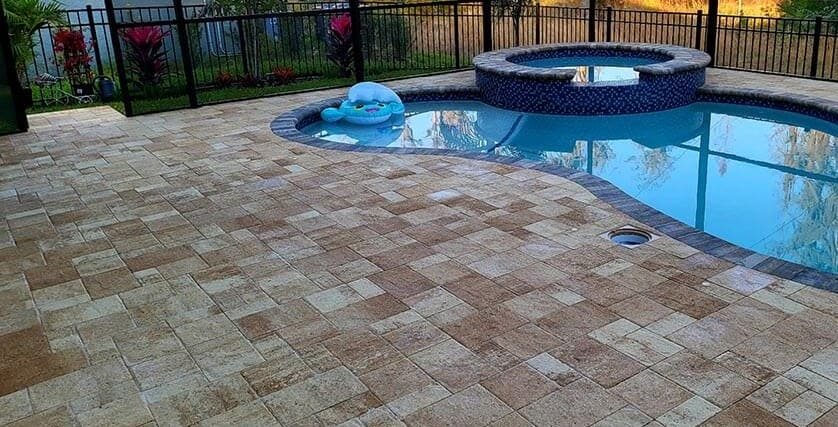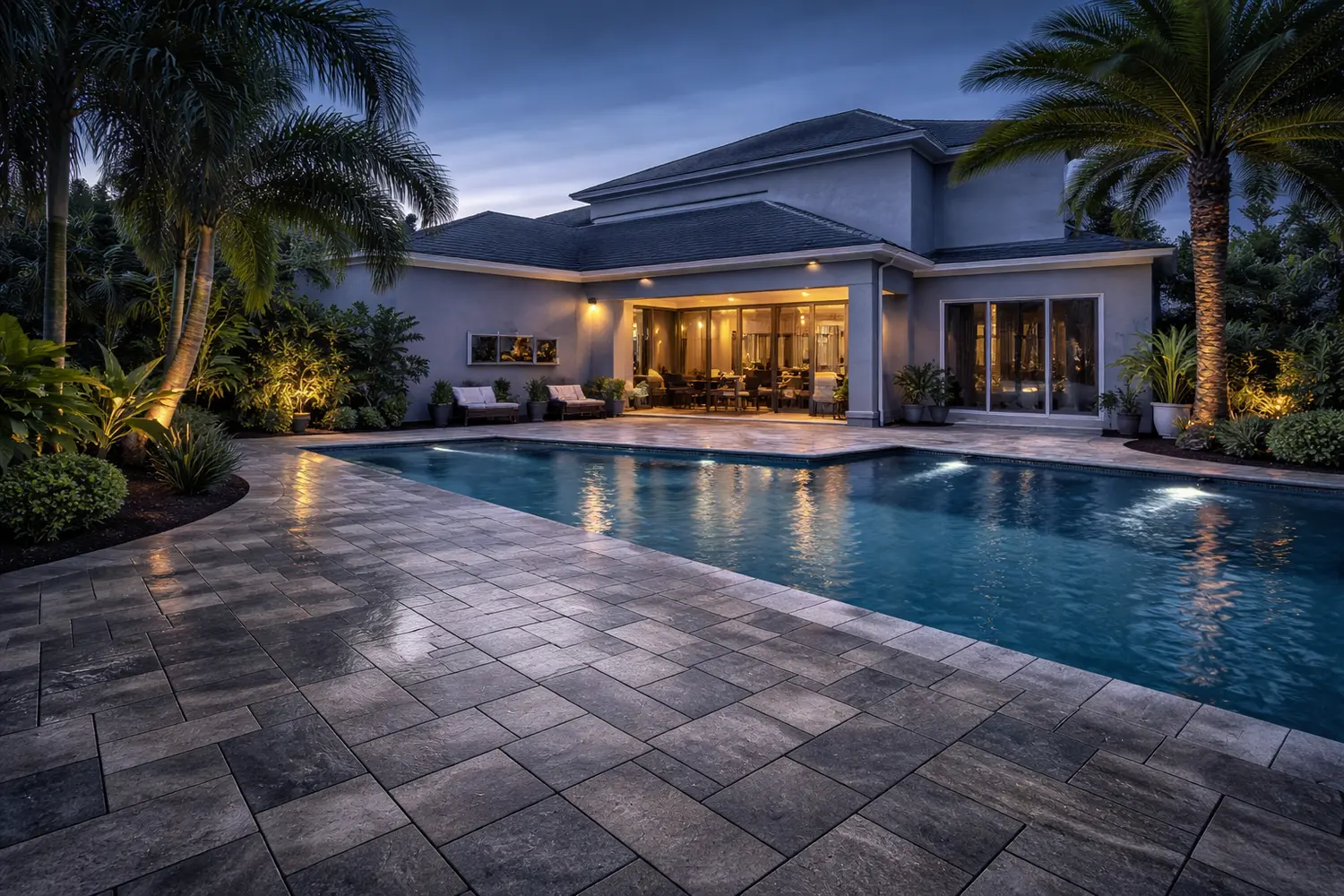
If you are searching for Jacksonville pool deck paver sealing, the short answer is that sealing is worth doing when it is part of a full maintenance process. Pool decks stay wetter than driveways, collect body oils and sunscreen, and see chemical splash from the pool itself. In Northeast Florida humidity, those conditions make pavers age faster unless cleaning, joint care, and sealer selection are handled correctly.
For service details, see HydroSeal’s pool deck sealing service page.
Why pool decks need a different approach than driveways
Constant moisture changes everything
Driveways dry out faster and mostly deal with vehicle traffic, UV, and rain. Pool decks deal with all of that plus daily splash-out, dripping towels, wet feet, and frequent rinsing. That moisture cycling keeps pores active and can shorten sealer life if the wrong system is used.
Barefoot safety is a top priority
On a driveway, finish preference is mostly visual. On a pool deck, finish choice and application rate directly affect traction under wet conditions. The goal is protection without creating a slick film. If you are comparing appearance options, review wet-look vs natural-look sealer differences before picking a finish.
Chemical exposure is real
Chlorine and other pool chemicals do not usually destroy pavers overnight, but repeated exposure changes how surfaces weather. Over time, unprotected decks can fade unevenly and hold stains faster. Sealing helps slow that cycle and makes ongoing pool deck paver cleaning more predictable.
Common Jacksonville pool deck issues
1) Slippery surfaces
When homeowners report slippery pool deck pavers, the cause is usually a process issue: too much film build, wrong product choice, or old residue not fully corrected before resealing. The fix is not “never seal”; it is a better prep-and-product plan.
2) Algae and mildew growth
Shaded corners and low-airflow fence lines stay damp longer in Jacksonville. That invites algae and mildew, especially in rainy season. Controlled cleaning and proper dry-out timing matter before any sealer is applied.
3) Faded color and patchy appearance
UV, chlorine exposure, and routine cleaning wear can leave pool decks looking dull or uneven. A correctly chosen sealer can restore more consistent appearance while still prioritizing safety.
4) Joint sand loss
Splashing, rain runoff, and repeated washdowns can move joint sand out over time. Once joints are low, paver edges become more vulnerable and weeds or insects become more common. Sealing should be paired with joint condition correction, not done as a cosmetic-only step.
5) Chlorine and routine chemical contact
The reality of pool ownership is regular chemical management. A quality sealer does not eliminate chemical effects, but it reduces direct absorption and helps the deck stay easier to maintain across seasons.
Concrete paver pool deck vs travertine pool deck
| Category | Concrete Paver Pool Deck | Travertine Pool Deck |
|---|---|---|
| Material behavior | Manufactured concrete; consistent shape and density by product line | Natural stone; variable porosity and pattern from piece to piece |
| Cleaning approach | Controlled professional cleaning with stain-targeted chemistry | Gentler cleaning to avoid etching or surface damage |
| Sealer strategy | Film control and finish selection matched to wet traffic | Lower-build or penetrating approach to protect stone character |
| Slip considerations | Important; must avoid overbuild and slick finishes | Equally important; texture preservation is key |
| Typical reseal review | Often 18–24 months around pools in Florida conditions | Often 18–24 months with condition-based checks |
For stone-specific service details, see travertine sealing service information.
How HydroSeal handles pool decks
Controlled cleaning first
HydroSeal starts with controlled cleaning rather than aggressive, one-speed pressure-only methods. The objective is to remove biological growth and contamination while protecting the surface profile and preparing joints for the next steps.
Non-slip considerations are planned up front
Pool decks are evaluated with wet-use safety in mind before sealer selection. Product and finish choices are based on how the area is used, not just how dark or glossy the deck can look on day one.
Trident-only product system
HydroSeal uses Trident-only products so chemistry stays within one compatible system. That lowers mismatch risk and gives more predictable maintenance outcomes over time.
Material-specific product choice
Concrete pavers and travertine are not treated as interchangeable. Each deck is scoped by material, porosity, and condition so sealing supports long-term performance instead of short-term shine.
Local examples in Northeast Florida
Jacksonville Beach pool deck
Coastal air and frequent moisture can speed up wear. Jacksonville Beach pool decks often need earlier review cycles and strict traction-focused finish decisions.
Ponte Vedra travertine pool deck
In Ponte Vedra, travertine installations commonly combine coastal humidity with high-end finish expectations. The best results come from gentle cleaning and realistic maintenance timing.
Nocatee backyard pool area
In Nocatee, irrigation patterns and newer hardscape installations can keep decks wet longer. That makes condition-based scheduling more reliable than fixed multi-year promises.
Frequently Asked Questions
Should pool deck pavers be sealed?
Yes. In Jacksonville, sealing pool deck pavers helps reduce water absorption, slows color fade, improves stain resistance, and supports joint sand stability. It also makes routine pool deck paver cleaning easier when sunscreen, food, and organic debris are common.
Does sealing make a pool deck slippery?
It can if the wrong finish or application method is used. A pool deck should be sealed with product selection and application rates that account for barefoot traffic and wet conditions, and non-slip considerations should be planned before sealing starts.
Is travertine different from regular pavers?
Yes. Travertine is natural stone and behaves differently than concrete pavers. It usually needs gentler cleaning, careful product selection, and lower-build sealer choices so the surface can be protected without creating a heavy film.
How often should a pool deck be resealed?
Most Jacksonville pool decks should be reviewed around 18 to 24 months because of constant moisture, chlorine exposure, and UV. Some decks can stretch longer, but condition-based assessment is more reliable than setting a fixed date years in advance.
What does pool deck sealing cost in Jacksonville?
Pool deck sealing cost in Jacksonville depends on square footage, cleaning intensity, joint sand correction needs, and whether the surface is concrete pavers or travertine. The practical way to price it is by on-site condition, not a single flat number.