TL;DR / Key Takeaways
- Why pavers fail faster near the beach: they face overlapping stress from salt air, humidity, blowing sand, irrigation, and more frequent rain cycles.
- Beach paver sealing intervals are usually shorter than inland intervals; many coastal properties should be reviewed around 18–24 months.
- Common coastal symptoms are faster sand loss, earlier fading, more mildew/algae growth, and more efflorescence activity.
- Coastal pavers benefit from stricter prep: old sand removal, ASTM C144 repacking, and condition-based sealing with Trident-only products.
- Jacksonville Beach, Atlantic Beach, and Ponte Vedra pavers can perform well long term, but they require proactive maintenance timing.
Yes, coastal pavers wear faster — and the difference is significant
Direct answer: pavers near the coast usually fail faster because they stay wetter, collect more salts, and experience more abrasive wear than inland installations. Coastal paver maintenance is not just "inland maintenance plus ocean views." It is a different operating environment, and the maintenance schedule has to reflect that.
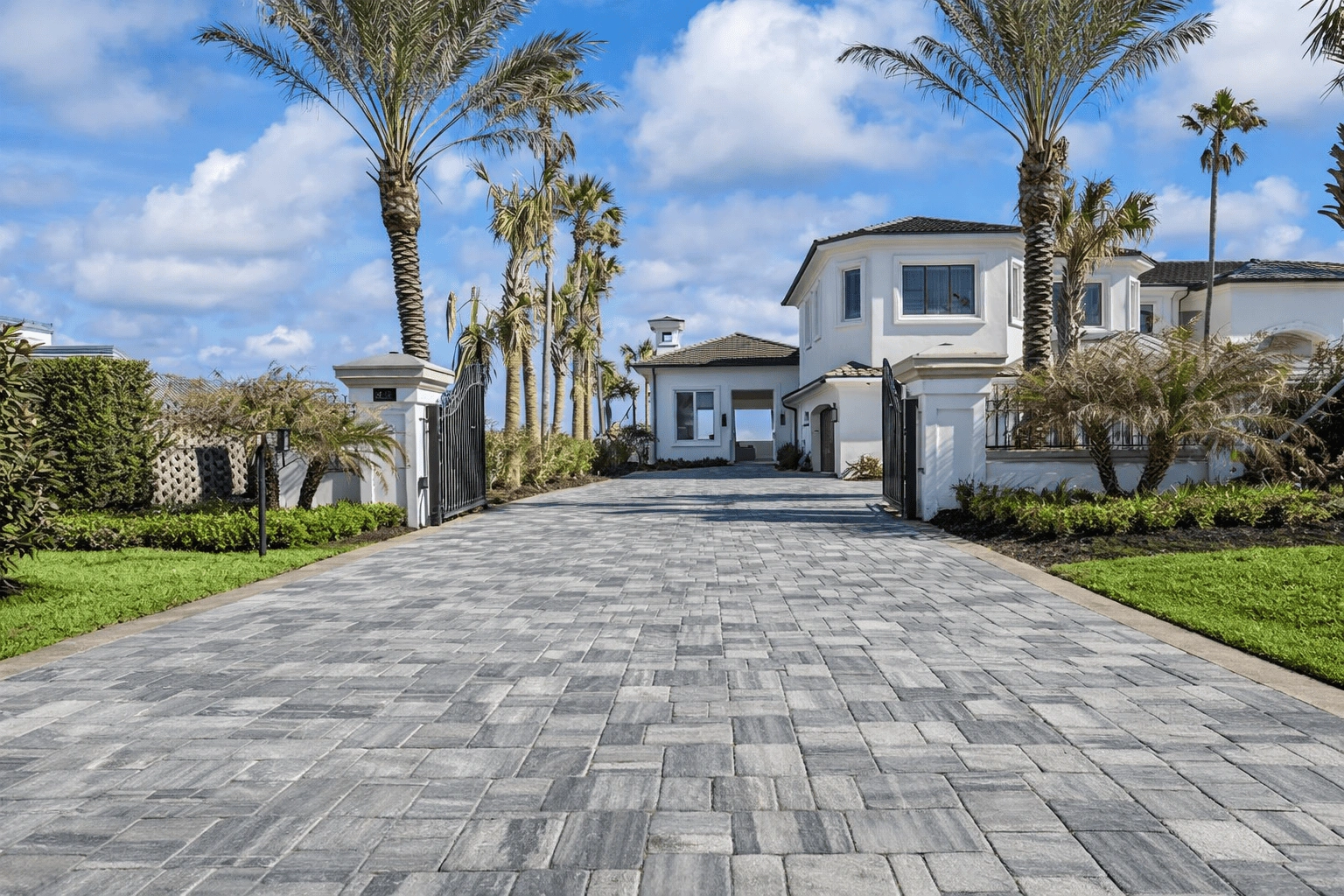
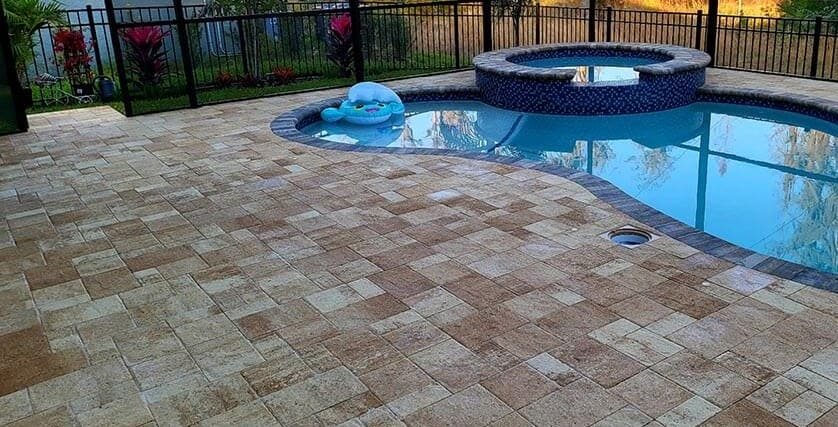
A driveway near Jacksonville Beach can look older sooner than a comparable inland driveway simply because chloride exposure and moisture cycling are higher all year. A Ponte Vedra pool deck may show dulling and biological growth earlier than expected even with regular cleaning. An Atlantic Beach patio can hold dampness longer after rain and become a repeat mildew zone.
The five coastal factors that accelerate wear
1) Salt air
Salt air carries chloride ions that settle on pavers and move into pore structure during rain, dew, and humidity cycles. Over time, this contributes to rougher surface texture and more active mineral activity. If efflorescence is already present, coastal moisture conditions can keep it cycling longer. For background on white residue behavior, see Why Are My Pavers Turning White in Florida?.
2) Higher humidity
Humidity keeps pavers from fully drying as quickly as inland surfaces. That means more baseline pore moisture and more opportunity for film stress during cure windows. It also increases the chance that algae and mildew rebound between cleanings.
3) Irrigation and routine wetting
Coastal neighborhoods often have frequent irrigation in addition to rain and sea air moisture. Constant wetting and drying drives water through joints and pores, accelerating joint movement and erosion.
4) Blowing sand
Windblown sand acts like a fine abrasive on the sealer surface. It can slowly dull sheen and wear top-layer protection, especially on open driveways and pool decks with direct exposure.
5) More frequent rain influence
Beach-adjacent zones often experience quick storm cells and moisture rebounds. Even when rainfall totals are similar, the way surfaces stay damp can differ. More wet-cycle frequency means more stress on both joint stability and the sealer film.
Inland Pavers vs Beach-Area Pavers
| Performance Area | Inland Pavers | Beach-Area Pavers |
|---|---|---|
| Salt exposure | Low to moderate | High, recurring chloride deposition |
| Drying pattern | Generally faster | Slower, higher retained moisture |
| Joint sand stability | More stable with normal storms | Faster loss from wet cycles and wind influence |
| Biological growth pressure | Moderate by shade level | Higher mildew/algae pressure in damp coastal zones |
| Typical reseal review timing | Often around 2–3 years | Often around 18–24 months |
Common beach-area symptoms homeowners notice first
Faster sand loss
Coastal joints can open faster because moisture cycles are more frequent and wind influence is higher. Once sand drops, water movement increases and deterioration speeds up. If this is your primary issue, see Why Is Sand Coming Out of My Pavers?.
Earlier fading and finish dulling
Salt, UV, and abrasion combine to shorten visual finish life. Homeowners often notice a matte, tired look earlier on beach-area pavers than inland equivalents.
More mildew and algae
Higher humidity and repeated wetting raise biological growth pressure. Even with routine rinsing, spores recolonize quickly where pores stay damp.
More efflorescence activity
Efflorescence is moisture-driven. Coastal moisture patterns keep dissolved salts moving, so white haze and mineral deposits are often more persistent.
More frequent resealing decisions
Beach paver sealing is usually not "set it and forget it" for three years. Condition checks are needed earlier to catch wear before full failure.
Why HydroSeal recommends shorter coastal cycles
HydroSeal commonly recommends shorter reseal cycles near the coast because the environment compresses the useful life of the film. That recommendation is condition-based, not sales-based. The goal is to inspect before visible failure rather than after joint washout, surface fade, and pore contamination have already advanced.
In practical terms, many coastal properties are reviewed around 18 to 24 months, then scheduled based on actual condition. Some sheltered homes can run longer. High-exposure homes may need earlier attention.
How the coastal process is adjusted
Old sand removal and reset
Before resealing, worn or contaminated joint material is removed so the joint system can be rebuilt correctly instead of trapped under a new film.
ASTM C144 repacking
HydroSeal uses ASTM C144 sand for joint repacking, with compaction and settling steps designed to restore joint stability under coastal wet-cycle pressure.
Trident-only products
Product choice matters more near the coast. HydroSeal uses Trident-only products and selects formulations based on current surface condition, exposure level, and cure risk.
Condition-based sealing
Coastal scheduling is based on measured conditions and weather windows, not just date intervals. If the surface is not in a reliable condition to seal, the job sequence is adjusted to protect long-term performance.
FAQ: coastal paver maintenance
Why do pavers near the beach fail faster?
Beach-area pavers deal with salt air, high humidity, windblown sand, and frequent wet cycles at the same time. Those combined stresses increase moisture movement, surface wear, and joint erosion compared with inland properties.
Does salt air damage sealed pavers?
Sealing slows salt intrusion, but salt air still adds stress to the sealer film. Coastal surfaces usually need earlier inspection and maintenance because the protective layer works harder and wears faster.
How often should beach-area pavers be resealed?
Many coastal pavers should be evaluated around 18 to 24 months instead of waiting a full inland cycle. Exact timing depends on exposure, traffic, and current film condition.
Why do beach-area pavers lose sand faster?
Frequent moisture cycles, irrigation, and storm runoff move joint sand more aggressively near the coast. Once joints open up, water and debris enter faster and erosion accelerates.
Are pavers near Jacksonville Beach harder to maintain?
They are usually more maintenance-sensitive, not impossible to maintain. With proper cleaning, ASTM C144 sand repacking, and condition-based resealing, beach-area pavers can still perform well long term.