TL;DR / Key Takeaways
- Travertine paver sealing protects porous natural stone from moisture, staining, and uneven weathering.
- Travertine requires gentler cleaning and careful sealer selection compared with concrete pavers.
- Wrong cleaners or heavy-film products can damage appearance and increase slip risk.
- Pool deck travertine needs non-slip planning before the first coat is applied.
- In Northeast Florida, most travertine should be reviewed on a 2–3 year cycle, with earlier checks in coastal or pool environments.
Homeowners usually search "travertine sealing near me" after seeing staining, fading, mildew, or a finish that no longer looks consistent. That is common in Florida. Travertine is beautiful but porous, so it absorbs moisture and contamination faster than many people expect. The best results come from material-specific prep and sealer decisions, not a generic "paver sealing" package. For service scope, start with HydroSeal’s travertine sealing page.
Why travertine is different from standard concrete pavers
Natural stone structure
Concrete pavers are manufactured for consistency. Travertine is natural stone with variation in density, pore size, and surface texture from one piece to another. That means cleaning response and absorption rates can vary even within the same patio or pool deck.
Finish and texture sensitivity
Travertine can be damaged by over-aggressive pressure or wrong chemistry. A process that works on concrete can leave travertine dull, etched, or patchy. This is one reason travertine sealing Jacksonville homeowners need should begin with conservative cleaning and condition checks.
Moisture behavior around pools
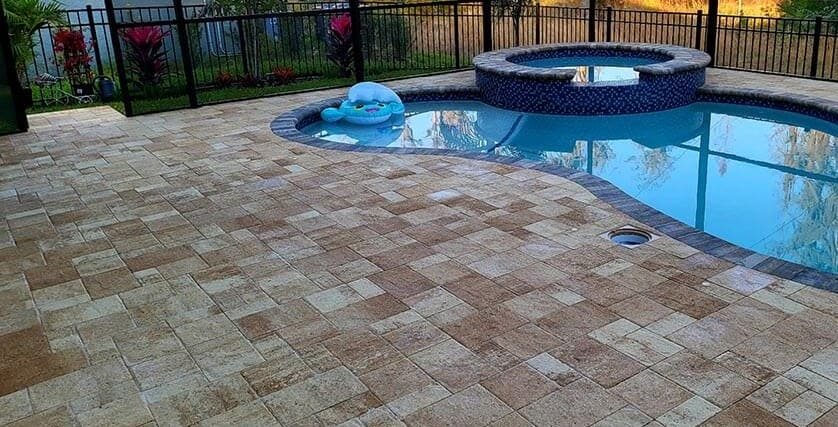
Many travertine installations are pool decks, where splash water, sunscreen, and humidity keep surfaces active. If you also need a full pool-focused overview, read Pool Deck Sealing in Jacksonville.
Common travertine problems in Northeast Florida
Staining
Leaf tannins, metal furniture marks, food spills, and organic debris can leave staining on unprotected travertine. Once contaminants sink into pores, cleanup becomes harder and often less uniform.
Fading and uneven tone
UV exposure and regular wet-dry cycling can flatten color and create patchy areas over time. Sealing helps stabilize appearance and slows visual aging.
Mildew and biological growth
Shaded or frequently wet areas can hold mildew. In neighborhoods with heavy irrigation, moisture retention can persist well after rainfall, increasing growth pressure.
Moisture absorption
Travertine that quickly darkens with water is usually absorbing too much moisture. That can accelerate staining and shorten cosmetic lifespan between maintenance cycles.
Slippery finish risk
The stone itself is often comfortable underfoot, but wrong finish choice or overbuild can reduce traction. This is especially important on any travertine pool deck sealing project.
Travertine vs concrete pavers
| Category | Travertine | Concrete Pavers |
|---|---|---|
| Material type | Natural stone with variable porosity | Manufactured concrete with more uniform behavior |
| Cleaning tolerance | Lower tolerance for aggressive methods | Generally more tolerant of standard cleaning process |
| Sealer approach | Carefully selected stone-compatible system | Wider range of compatible topical systems |
| Slip planning around pools | Critical to preserve traction and texture | Critical to prevent slick film build |
| Maintenance review timing | Often 2–3 years; earlier near pools/coast | Often 2–3 years depending on exposure |
Why travertine is often damaged by the wrong process
Many failures come from companies using one cleaning formula and one sealer for every surface. On travertine, that shortcut can create long-term issues: residue trapped in pores, uneven sheen, or a heavy finish that looks good at first and then wears irregularly.
Another common mistake is selecting a finish by appearance only. For wet areas, finish must be balanced with traction. If you are comparing looks, use this wet-look vs natural-look guide as a baseline before final product selection.
How HydroSeal handles travertine
Gentler cleaning methods
HydroSeal uses controlled cleaning tailored to natural stone rather than one aggressive process for all surfaces. The goal is contamination removal without damaging stone character.
Proper product choice by condition
Travertine sealer choice is based on porosity, exposure, and previous coatings—not only on desired sheen. This reduces mismatch risk and improves long-term consistency.
Non-slip planning on wet-use areas
For pool environments, slip considerations are built into planning and application. Protection should not come at the cost of barefoot confidence.
Trident-only products
HydroSeal uses Trident-only systems to keep chemistry compatibility consistent across prep and sealing stages.
Local examples: where process details matter
Ponte Vedra pool deck
In Ponte Vedra, coastal humidity and salt exposure can compress maintenance intervals. Travertine often benefits from earlier condition checks instead of waiting multiple years.
Jacksonville Beach travertine patio
Near the coast, windblown sand and frequent moisture can wear surfaces unevenly. Consistent cleaning and condition-based sealing help keep tone and texture more uniform.
Palencia travertine walkway
In Palencia, tree canopy and irrigation patterns can increase mildew pressure on shaded walkways. Material-specific cleaning is key before any reseal.
Frequently Asked Questions
Yes. Travertine is porous natural stone, so sealing helps limit moisture absorption, reduce staining, and slow surface weathering. In Florida humidity and rain cycles, unsealed travertine tends to discolor and hold contaminants faster.
Usually yes. Travertine needs gentler prep and more careful product matching than standard concrete pavers. The process is less forgiving if cleaners are too aggressive or if a high-build sealer is applied where a lower-build approach is needed.
Travertine should be sealed with products selected for natural stone and for the specific condition of the surface. The right option depends on porosity, previous coatings, desired finish, and wet-area safety requirements rather than a one-product-fits-all rule.
Yes, it can if the wrong finish or application rate is used. Around pools, travertine sealing should always include non-slip planning so protection and appearance do not come at the expense of traction.
Most travertine surfaces in Northeast Florida should be assessed around every 2 to 3 years, with earlier checks for pool decks or coastal exposure. Condition-based review is more accurate than relying on a fixed calendar promise.