Jacksonville Cost Guide
Driveway Paver-Sealing Cost Per Square Foot in Jacksonville
Square footage creates the starting point, but cleaning, old sealer, stains, joint-sand condition, repairs, access, product choice, and cure requirements determine the real project cost.
Quick answer
A trustworthy price cannot be calculated from driveway car count alone. Measure every included paver area, identify whether the project is maintenance or restoration, and separate optional or corrective work. Current pricing and availability should be confirmed directly for the property.
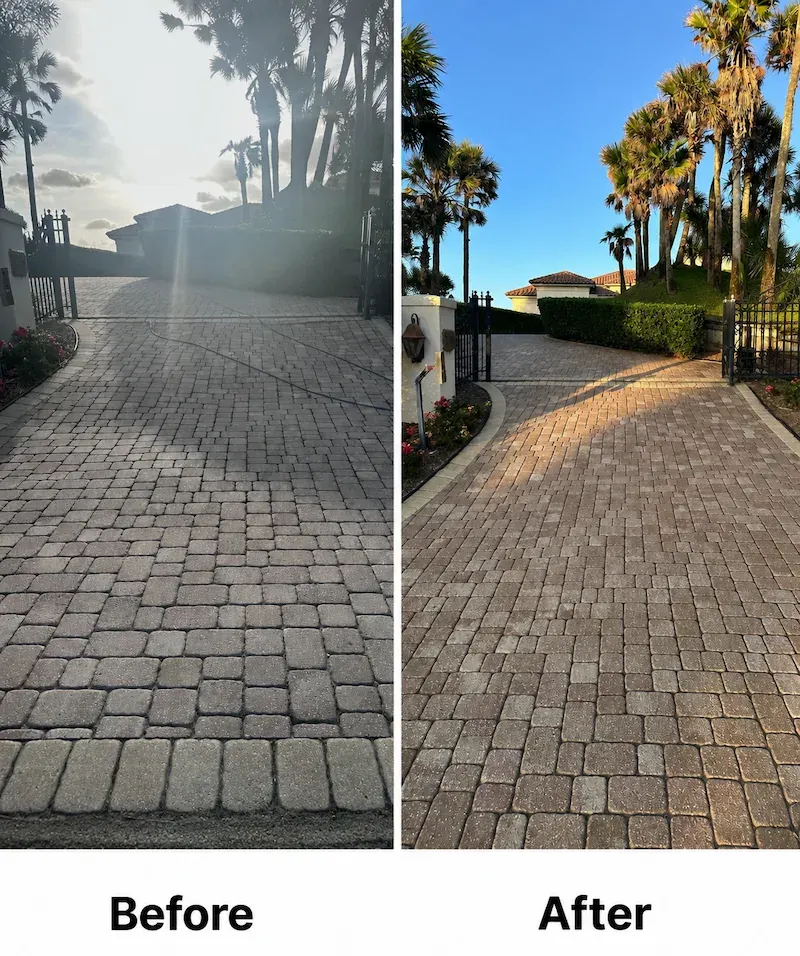
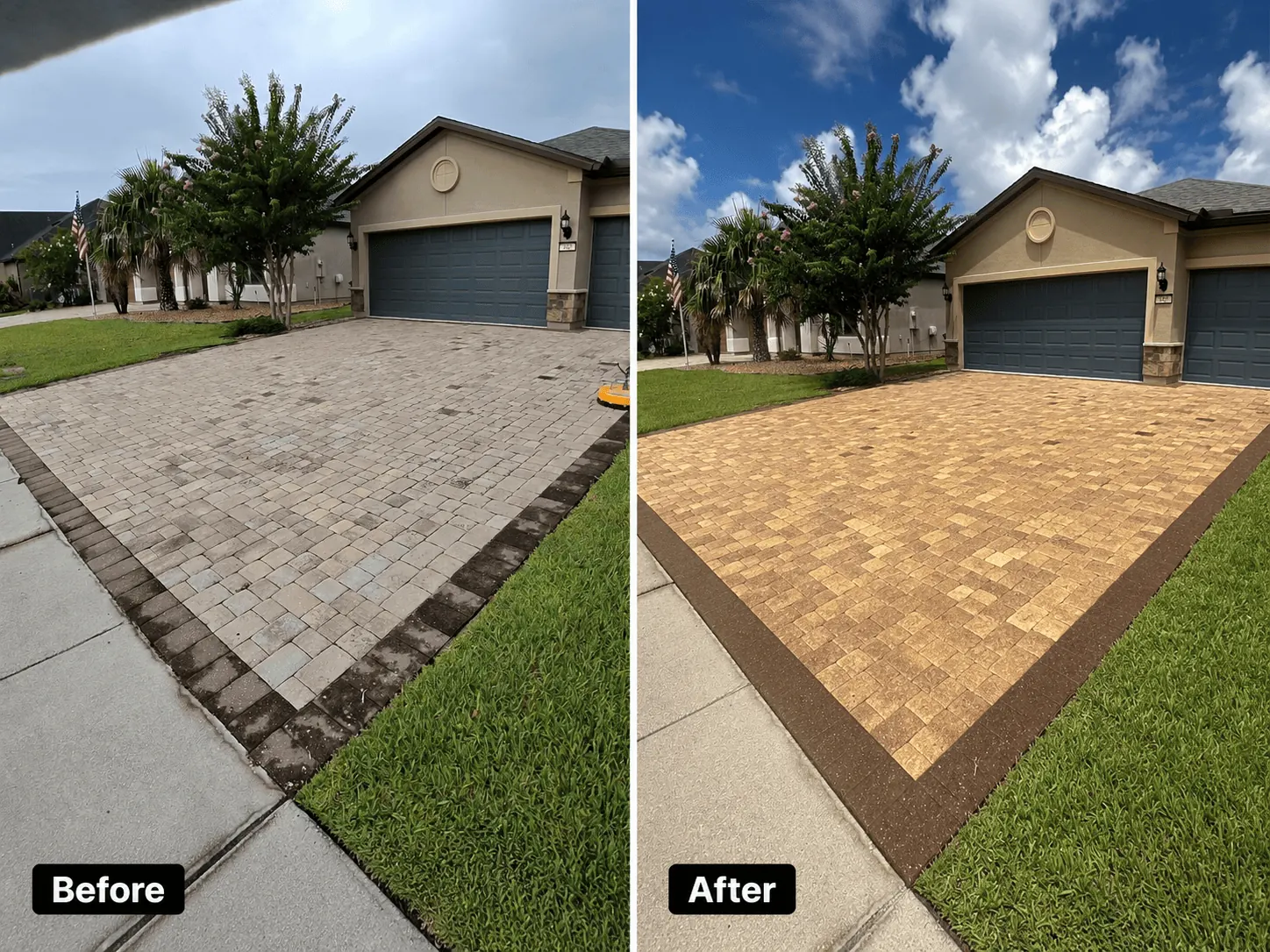
Pricing reference and limitations
Pricing reference updated July 30, 2026. Any figures published by HydroSeal apply only to selected standard residential concrete-paver projects within HydroSeal’s active Northeast Florida service area. They are planning references—not quotes—and may change.
Unless a written proposal states otherwise, reference pricing does not automatically include tax, failed-sealer stripping, paver repair or re-leveling, specialty stain treatment, difficult access, minimum service charges, extensive sand removal or replacement, natural stone, walls, coping, or surfaces outside the measured scope.
The basic cost formula
Measured paver area × applicable project rate + restoration or repair scope = estimated project cost.
The applicable rate changes with surface type and condition. A straightforward clean, joint-sand restoration, and seal project is different from failed-coating removal, heavy stain treatment, sunken-paver repair, or natural-stone work. See Driveway Paver Sealing in Jacksonville for the service scope, or use the paver sealing cost calculator for a quick planning estimate.
9 factors that change the price
- Total measured area
- Surface type: concrete pavers, clay brick, travertine, or natural stone
- Existing sealer: sound, unknown, overbuilt, whitening, or peeling
- Cleaning level: routine organic buildup versus neglected restoration
- Stains: oil, rust, fertilizer, tannins, silicone, paint, or tire marks
- Joint condition: depth, contamination, sand loss, width, and movement
- Repairs: low, rocking, spreading, or damaged pavers
- Access and water management
- Product, coats, weather window, and cure planning
Maintenance versus restoration cost
| Project condition | Typical scope | Cost impact |
|---|---|---|
| Routine maintenance | Professional cleaning, dry time, joint-sand work as needed, compatible sealer | Usually the simplest square-foot structure |
| Heavy organic buildup | More treatment, dwell, rinsing, and preparation | Additional labor and chemistry |
| Low or contaminated joints | Removal, drying, refill, compaction, and stabilization | More material and labor |
| Failed old coating | Testing, stripping, repeated rinsing, drying, and reset | One of the largest increases |
| Paver movement or settling | Lift, base correction, re-leveling, and joint restoration | Priced as repair scope |
What a professional quote should include
- Measured areas and explicit exclusions
- Professional cleaning and surface preparation
- Stain-treatment scope and limitations
- Existing-coating assessment
- Joint-sand material, color, and installation
- Sealer product and planned coats
- Repairs or re-leveling listed separately
- Weather, drying, cure, vehicle, and furniture guidance
- Payment terms and warranty boundaries
How to compare two estimates
Compare the measured area and process line by line. A lower square-foot number may exclude joint sand, multiple coats, stain treatment, sidewalks, porches, failed-sealer work, or repairs. A higher estimate is not automatically better either; it should explain the scope clearly enough that the homeowner can understand what is being purchased.
Northeast Florida measurement examples
Many two-car driveways are roughly 600 to 800 square feet before walkways or porches are added, while three-car and expanded driveways can be substantially larger. Direct measurement is more reliable than estimating by car count or neighborhood assumptions.
HydroSeal’s field approach
HydroSeal separates general square-foot pricing from restoration items that cannot be confirmed without seeing the property. The quote should identify the measured scope, preparation, joint-sand work, product system, repair items, exclusions, cure guidance, and conditions that could change the work.
Claims that require direct verification
Current rate, coupon eligibility, scheduling, active service radius, warranty eligibility, product availability, stain-removal feasibility, and whether an existing coating can be resealed or must be stripped should all be confirmed for the actual project.
Common questions
How is driveway paver-sealing cost calculated?
A contractor typically measures the included square footage, evaluates cleaning and surface preparation, joint-sand work, old-sealer condition, stains, repairs, access, product system, application requirements, and cure planning before producing a current quote.
How large is a typical two-car paver driveway?
Many two-car driveways are roughly 600 to 800 square feet before sidewalks, porches, aprons, or other paver areas are added, but the property should be measured rather than estimated by car count.
Is failed-sealer stripping included in a normal sealing price?
Usually it should be identified as separate restoration scope because removal can require testing, chemistry, agitation, repeated rinsing, drying, disposal, and additional visits.
Get a current measured quote
Send HydroSeal photos and the property address or use the quote form. Current pricing depends on measured area and actual condition.