TL;DR / Key Takeaways
- HydroSeal vs DIY paver sealing is mostly a prep comparison, not just a product comparison.
- Most DIY failures come from skipped steps: old sand removal, moisture checks, and surface-specific product selection.
- HydroSeal uses Trident-only products, ASTM C144 sand, controlled cleaning chemistry, and Trident Master Certified application standards.
- Florida humidity and storms make condition-based one-day vs two-day scheduling a major advantage.
- The lower upfront route can become the expensive route after stripping and resealing.
HydroSeal is usually the better choice for homeowners who want predictable results, because professional vs DIY paver sealing comes down to process control. DIY can work for small low-risk projects when every step is done correctly, but most homeowners underestimate prep depth, moisture risk, and product matching. In Florida conditions, those missed details are exactly what lead to haze, peeling, and short lifespan.
If you want a broader baseline comparison first, start with DIY vs Professional Paver Sealing.
DIY vs HydroSeal: Side-by-Side Comparison
| Category | DIY Approach | HydroSeal Approach |
|---|---|---|
| Prep assessment | Visual check only | Condition-based evaluation before final scope |
| Cleaning | Often pressure-first | Controlled bleach use plus rinse process |
| Joint sand | Top-off common | Old sand removal + ASTM C144 repack |
| Product quality | Retail products chosen by label | Trident-only products selected by surface |
| Application timing | Based on homeowner schedule | One-day vs two-day flexibility based on moisture and forecast |
| Troubleshooting | Reactive after issues appear | Preventive process managed by trained team |
| Expected lifespan | Highly variable, often short when prep is incomplete | More consistent, maintenance-cycle expectations explained up front |
Where DIY Usually Breaks Down
Preparation gets underestimated
Most homeowners focus on the sealer can. The bigger variable is preparation: removing contamination, correcting joints, and getting the surface truly ready. Skipping any of those steps makes product performance irrelevant.
Sand replacement is often incomplete
Many DIY jobs add fresh sand on top of old material because full removal is time-intensive. That shortcut is one of the most common causes of rapid joint washout and uneven stabilization.
Moisture risk is harder than it looks
A driveway can look dry but still hold pore moisture from overnight humidity, irrigation, or shaded retention. Florida paver sealing succeeds when the surface is condition-ready, not when the calendar is open.
What Most DIY Jobs Miss
- Old joint sand removal before repacking.
- ASTM C144 selection for stable joint performance.
- Controlled chemistry cleaning instead of pressure-only cleaning.
- Product matching by surface type instead of one-sealer-for-everything logic.
- Condition-based go/no-go decisions tied to weather and cure window.
Local Example: 600 sq ft Driveway in Fleming Island
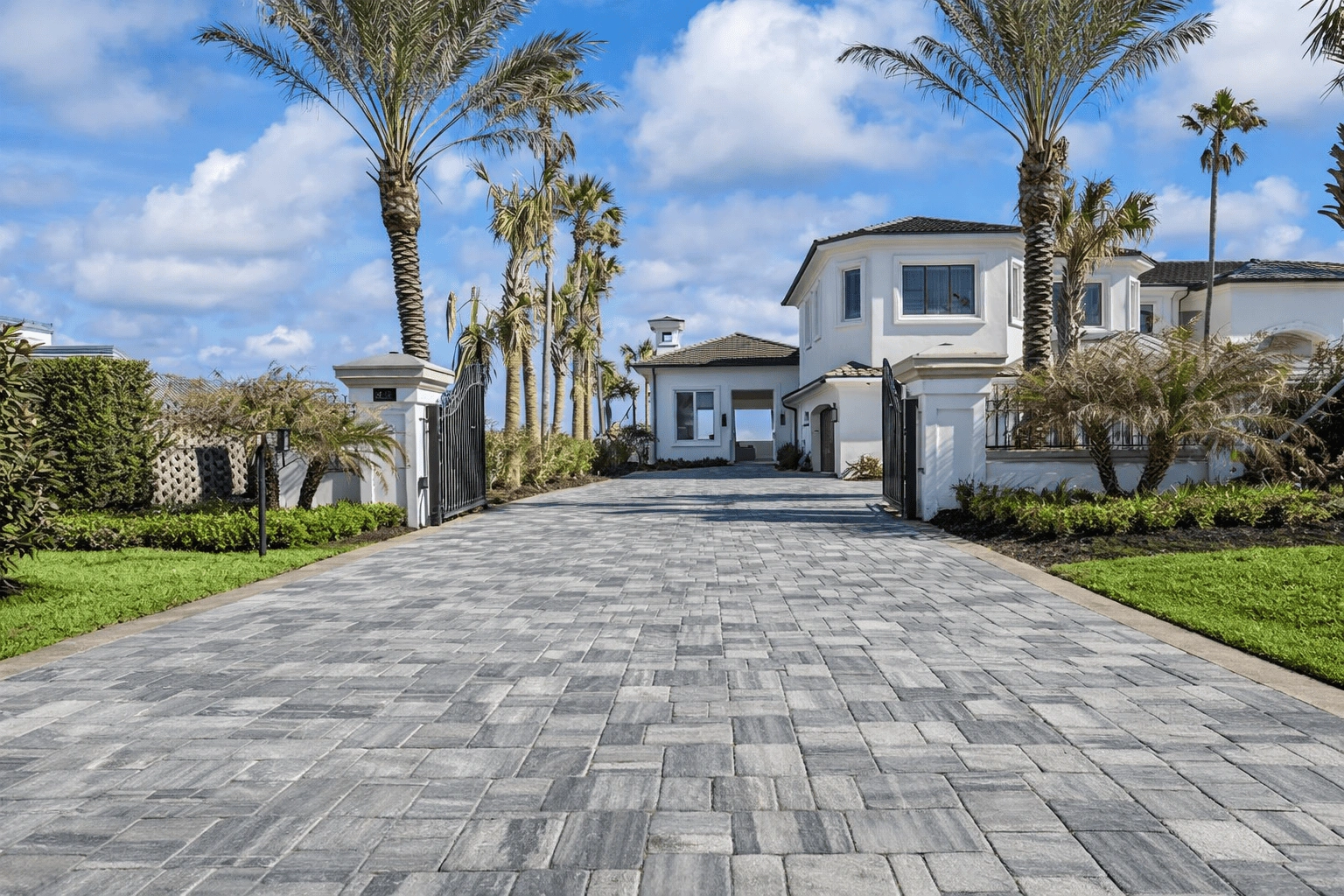
Consider a 600 sq ft driveway in Fleming Island. A DIY plan might include cleaner, sand, sealer, and a weekend of labor at a lower immediate cost. The hidden risk is incomplete prep: old sand left in place, inadequate chemical cleaning, and sealing too close to weather events.
A HydroSeal plan for that same driveway includes full prep, old sand removal, ASTM C144 repack, Trident-only product selection, and condition-based scheduling. Upfront cost is higher, but it reduces the chance of early failure and the much more expensive cycle of stripping and redoing the surface.
The same decision pattern shows up in Nocatee, where irrigation schedules and humidity frequently narrow safe sealing windows.
Why the "Cheaper" Route Often Costs More
DIY paver sealing comparison discussions usually stop at material receipts. The full paver sealing cost comparison should include failure risk, rework labor, and the cost of stripping if haze or peeling occurs. Once stripping is required, the original savings can disappear fast.
This is also why homeowners comparing companies should review process depth, not just brand claims. HydroSeal’s standards are outlined here: What Makes HydroSeal Different From Other Paver Sealing Companies.
What HydroSeal Does Differently
HydroSeal paver sealing emphasizes the steps most commonly skipped in DIY and low-cost contractor work:
- Old joint sand removal before repacking.
- ASTM C144 sand selection and proper compaction.
- Controlled bleach cleaning based on contamination level.
- Trident-only product system selected by surface type.
- Trident Master Certified process control.
- One-day vs two-day flexibility based on conditions, not convenience.
In practice, that means fewer surprises and a cleaner path to maintenance-cycle results rather than emergency correction.
Frequently Asked Questions
Is HydroSeal better than DIY paver sealing?
For most Florida homeowners, yes. Professional prep, old sand removal, ASTM C144 repacking, and condition-based application typically produce longer-lasting and more consistent results than DIY sealing.
How much more does professional paver sealing cost?
Professional sealing usually costs more up front than DIY materials, but many homeowners spend less long term because they avoid early failure, stripping, and resealing costs caused by incomplete prep.
What does HydroSeal do differently?
HydroSeal removes old joint sand, uses controlled bleach cleaning, repacks with ASTM C144, applies Trident-only products, and uses a condition-based one-day or two-day process managed by a Trident Master Certified team.
Can HydroSeal fix a failed DIY sealing job?
Often yes, but the scope depends on what failed. Some surfaces need stripping, corrective cleaning, and joint repair before resealing, which is why doing prep correctly the first time is usually less expensive.
How long do HydroSeal results last?
Most Florida paver surfaces need maintenance on a realistic cycle rather than a lifetime promise. Lifespan depends on UV, traffic, irrigation, and maintenance habits, but process quality is the biggest controllable factor.