Quick answer: Paver sealing is usually worth considering when the homeowner wants richer color, joint-sand stabilization, easier cleanup and protection from normal water and stain exposure. It may not be worth it when drainage is unresolved, the pavers are structurally unstable, the owner wants zero maintenance, or the existing coating must first be stripped.
Florida weather is hard on outdoor hardscapes. Sunlight fades pigments, heavy rain moves joint sand, irrigation leaves mineral residue and shaded areas support algae. Sealing can help manage several of those problems, but it should not be sold as a permanent cure.
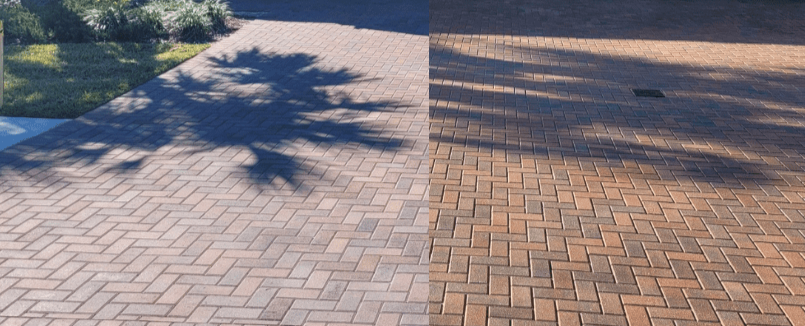
What sealing can realistically do
A suitable sealer can enhance color, reduce water absorption, improve resistance to common stains and help stabilize properly installed joint sand. Film-forming systems can provide a more finished appearance, while penetrating sealers can add water resistance with little visible change.
Sealing may also make routine cleaning easier because contamination is less likely to absorb immediately into the surface. The result still depends on preparation, product compatibility, application conditions and ongoing care.
What sealing cannot promise
No sealer makes pavers maintenance-free. Weeds can still grow from windblown debris above the joints. Algae can still develop where moisture and shade remain. Tire marks, rust, fertilizer stains and irrigation residue may still require treatment.
Sealer also cannot correct settlement, broken edge restraints, poor drainage or deeply contaminated pavers. Those conditions should be repaired or managed before cosmetic sealing becomes the priority.
When sealing is usually a good investment
- The pavers have faded and the homeowner wants stronger color.
- Joint sand is washing out and the system is suitable for stabilization.
- The area receives regular rain, irrigation, vehicle traffic or pool use.
- The homeowner accepts periodic cleaning and future maintenance coats.
- The surface can be dried and prepared under appropriate conditions.
When waiting may be smarter
- Drainage or irrigation problems are repeatedly soaking the area.
- Pavers need re-leveling or edge-restraint repair.
- The existing coating is white, peeling or incompatible and has not been stripped.
- The homeowner expects sealer to permanently stop all weeds or algae.
- The selected finish could create an unwanted sheen or traction concern.
Wet look, natural look or no sealer?
The best answer depends on the surface and the homeowner’s priorities. A decorative driveway may benefit from color enhancement and joint stabilization. A travertine pool deck may be better suited to a breathable penetrating product with minimal sheen. Some homeowners prefer the lower commitment of keeping concrete pavers clean and unsealed.
Compare the options in HydroSeal’s wet-look versus natural-look guide and sealer selection guide.
The decision should be based on lifecycle cost
The initial quote is only part of the cost. A sealed surface will eventually need professional cleaning, inspection and possibly a maintenance coat. A poor installation may require expensive stripping. Choosing the correct system and accepting its maintenance cycle matters more than choosing the cheapest first application.
For Jacksonville, Nocatee, Ponte Vedra and nearby communities, HydroSeal evaluates surface type, existing coatings, moisture exposure, drainage, traffic and desired appearance before recommending a system. That evaluation is what determines whether sealing is likely to provide enough value for the specific property.
Frequently asked questions
Does paver sealing stop weeds permanently?
No. Stabilized joints may reduce sand movement and make conditions less favorable, but weeds can still grow from seeds and debris deposited above the joints.
How long does paver sealer last in Florida?
Service life varies with preparation, exposure, traffic, drainage, product type and maintenance. Condition-based inspections are more reliable than a fixed calendar.
Is it better to leave pavers unsealed?
Sometimes. Unsealed pavers avoid coating maintenance, but they may stain more readily and joint sand may require more frequent attention. The right choice depends on the surface and the homeowner’s priorities.